Decanter centrifuges are widely used for solid-liquid separation in industries such as wastewater treatment, oil and gas, mining, food processing, and chemical manufacturing. While operating parameters such as bowl speed and differential speed can be adjusted during operation, several critical mechanical factors are fixed during equipment design and manufacturing. These structural parameters have a direct impact on separation efficiency, solids dryness, throughput capacity, and overall machine performance.
1. Bowl Diameter and Effective Length
The bowl diameter and effective length are among the most important design parameters of a decanter centrifuge.
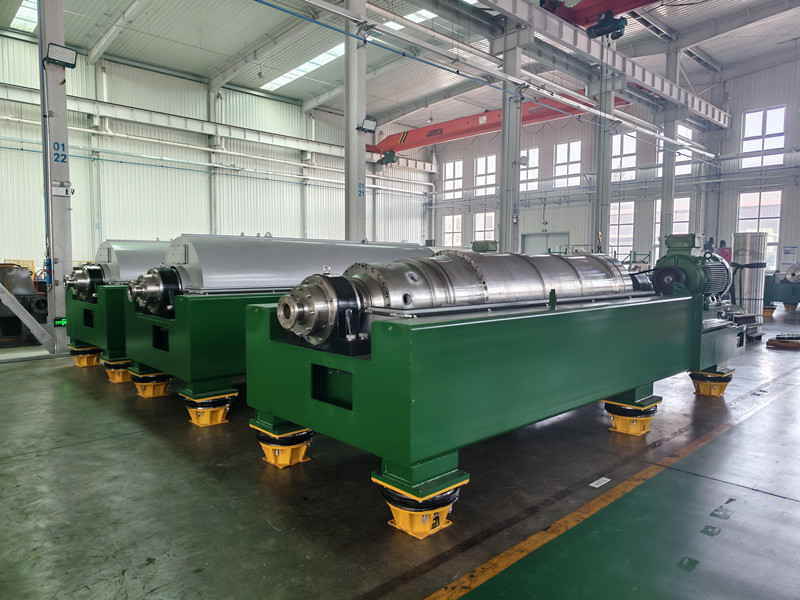
A larger bowl diameter and longer effective length provide a greater settling area, allowing more solids to be separated from the liquid phase. At the same rotational speed, a larger diameter also generates a higher centrifugal force, which generally improves separation efficiency. In addition, a longer bowl increases the residence time of the material inside the centrifuge, giving fine particles more opportunity to settle.
However, increasing bowl diameter is not always beneficial. Larger bowls require lower maximum operating speeds due to mechanical strength limitations, which can partially offset the gain in centrifugal force. In most industrial applications, bowl diameters typically range from 200 mm to 1,000 mm, with length-to-diameter ratios commonly between 3:1 and 4:1.
Modern decanter centrifuges increasingly adopt high-speed designs with larger length-to-diameter ratios. These configurations are particularly effective for processing low-concentration sludge and achieving higher cake dryness.
Another advantage of a larger bowl diameter is improved solids conveying capacity. For the same throughput, a larger centrifuge can often operate at a lower differential speed, reducing wear on the scroll and extending equipment service life.
2. Bowl Cone Angle
The cone section of the bowl plays a critical role in solids transport and dewatering.
As separated solids move toward the discharge port, they must overcome the opposing hydraulic forces generated by the liquid phase. The bowl cone angle directly influences this process.
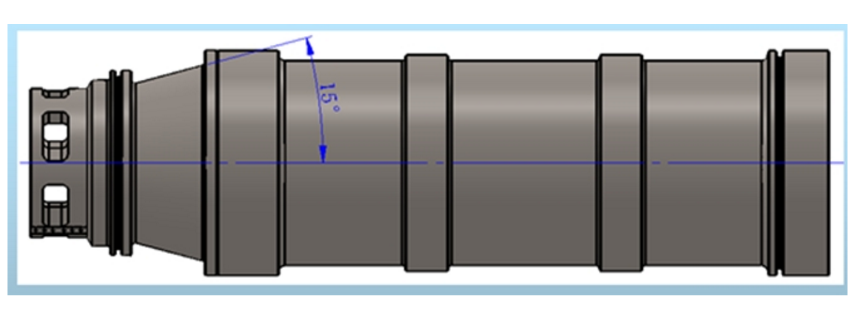
From a clarification perspective, a larger cone angle can help improve liquid separation. However, for solids conveyance and dewatering, a smaller cone angle is generally preferred because it reduces the tendency of solids to slide backward under centrifugal force.
For difficult-to-dewater materials such as activated sludge, decanter centrifuges often utilize a half cone angle of approximately 6 degrees to minimize solids backflow and improve cake dryness. For easier-to-separate materials, cone angles up to 10 degrees are commonly used to ensure smooth solids discharge while maintaining good separation performance.
Selecting the appropriate cone angle requires balancing clarification efficiency, solids transport capability, and dewatering performance.
3. Scroll Pitch
Scroll pitch refers to the distance between two adjacent flights of the conveyor screw. It is a key parameter affecting solids transport efficiency inside the centrifuge.
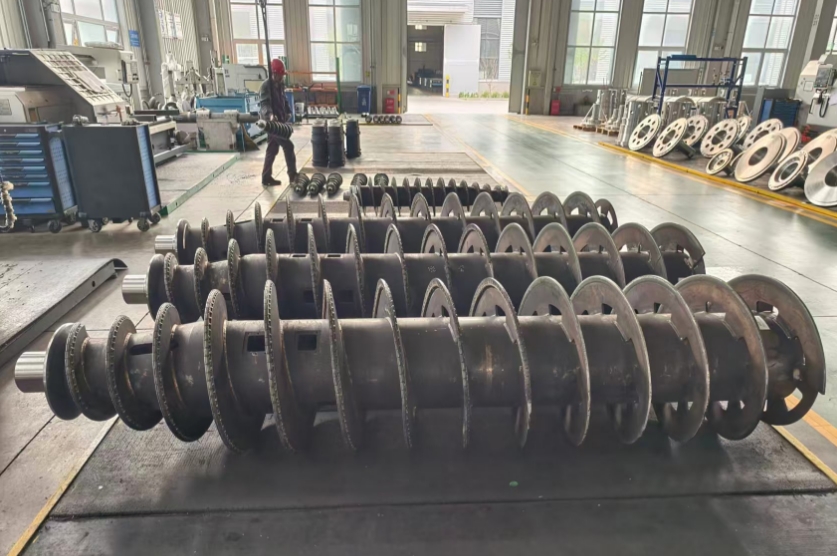
When the scroll diameter remains constant, a larger pitch results in a greater flight angle. While this can increase solids conveying capacity, it may also increase the risk of solids accumulation or blockage between flights, especially when processing sticky or difficult materials.
An excessively large pitch can also reduce the number of screw flights within the conical section, leading to uneven solids distribution and potentially increased machine vibration.
For challenging applications such as biological sludge dewatering, smaller pitches are generally preferred to ensure stable solids transport. Typical pitch values range from one-fifth to one-sixth of the bowl diameter.
For materials that separate easily, larger pitches can be used to maximize solids conveying capacity and improve throughput. In these applications, pitch values are commonly between one-half and one-fifth of the bowl diameter.
Conclusion
The performance of a decanter centrifuge is determined not only by operational settings but also by its fundamental mechanical design. Bowl diameter, effective length, cone angle, and scroll pitch are among the most critical structural factors influencing separation efficiency, solids dryness, throughput, and equipment reliability.
Understanding these design parameters can help operators and engineers select the most suitable centrifuge configuration for their specific application, ensuring optimal performance and long-term operational success.