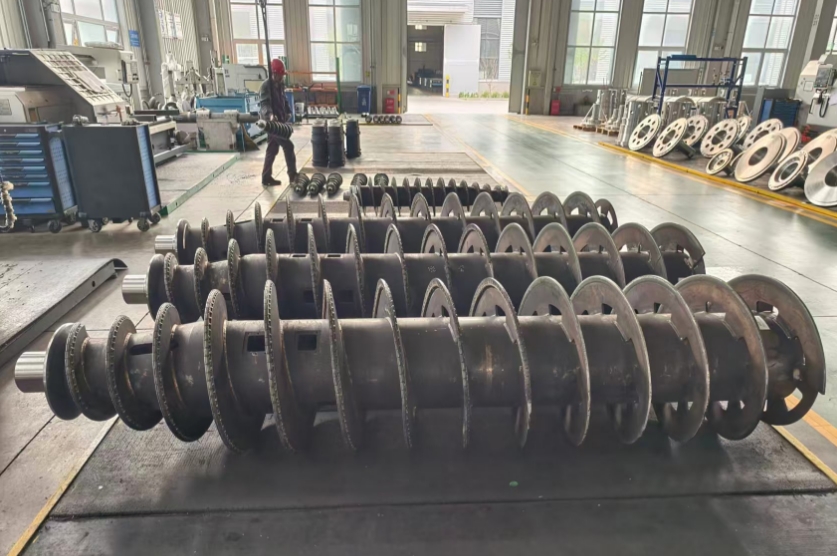
The scroll, also known as the screw conveyor, is one of the most critical internal components of a decanter centrifuge. Installed inside the rotating bowl, the scroll rotates at a differential speed relative to the bowl. Its primary function is to continuously transport separated solids toward the conical end of the bowl for discharge.
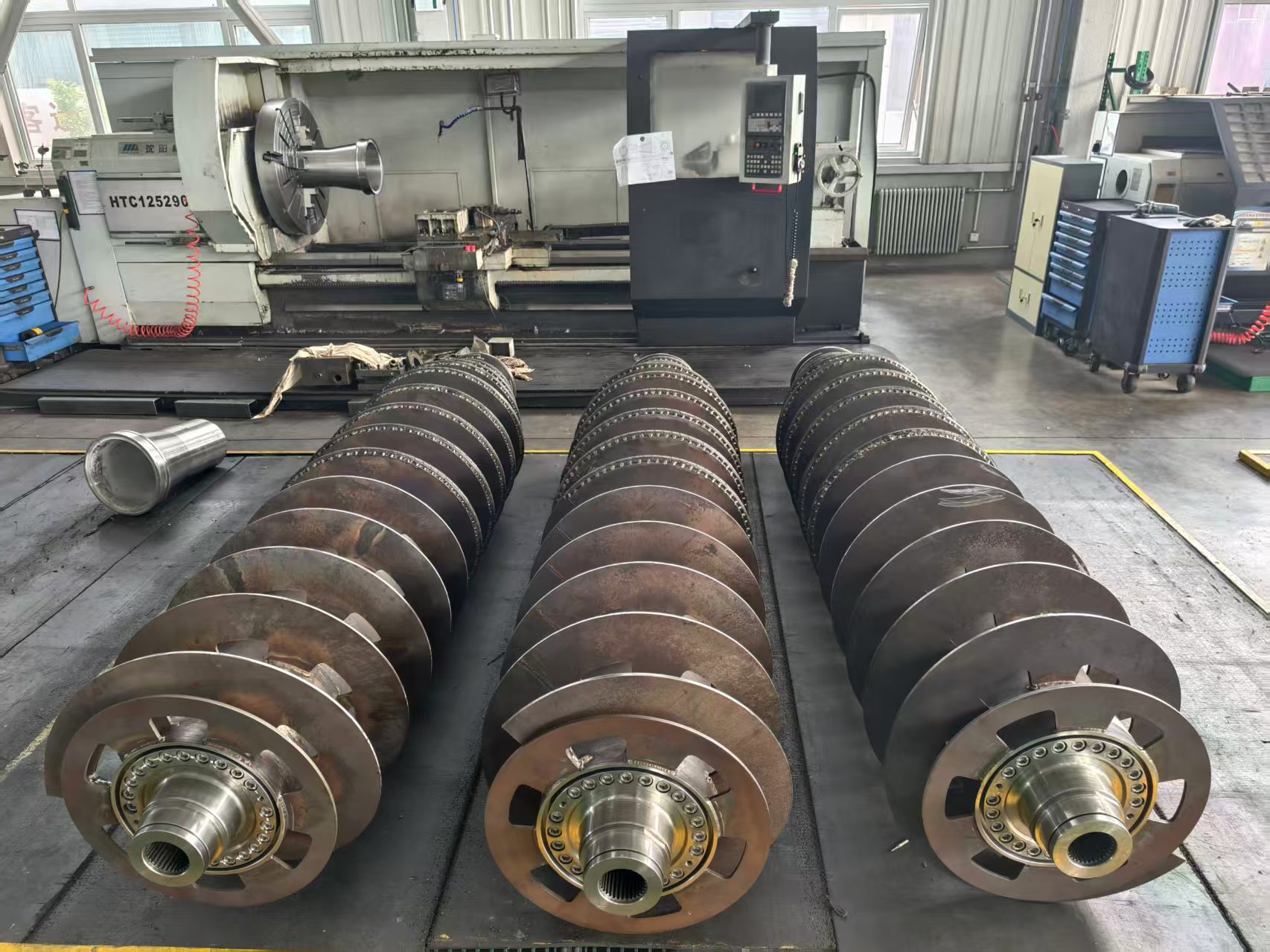
The design, material selection, and operating parameters of the scroll have a direct impact on separation efficiency, solids dryness, throughput capacity, and the overall performance of the decanter centrifuge.
The scroll mainly consists of helical flights, the scroll body, and the feed distribution chamber.
1) Helical Flights
The helical flights are designed as continuous spiral blades with a constant pitch, typically configured in a right-hand orientation. Unlike a conventional external screw conveyor, the scroll operates under high centrifugal force inside the rotating bowl and does not independently transport material.
During operation, solids are first deposited onto the inner wall of the bowl under centrifugal force. The scroll then conveys the settled solids toward the solids discharge end through the differential speed between the bowl and the scroll.
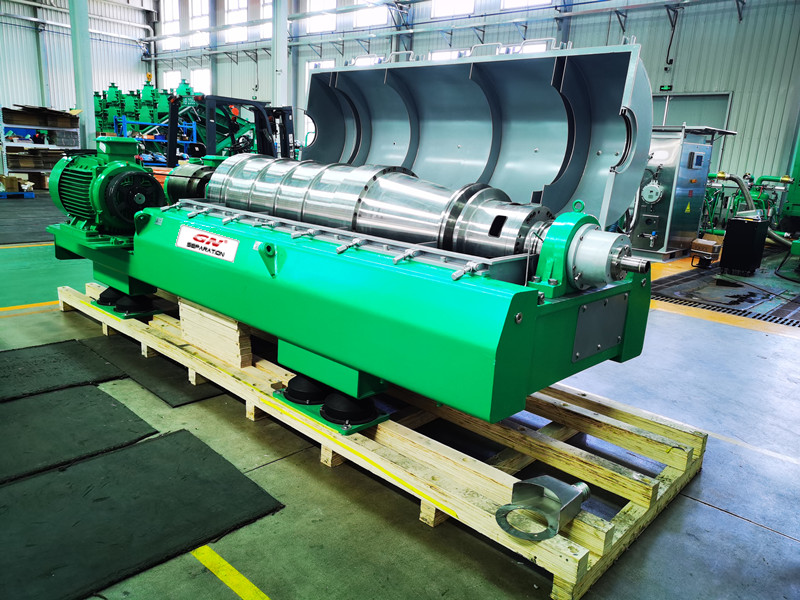
Since the flights are continuously exposed to high-density and abrasive solids, they are subject to constant wear during operation. Excessive wear can reduce conveying efficiency, resulting in higher moisture content in the discharged solids and reduced separation performance. Therefore, effective wear protection and regular inspection are essential for maintaining stable operation.
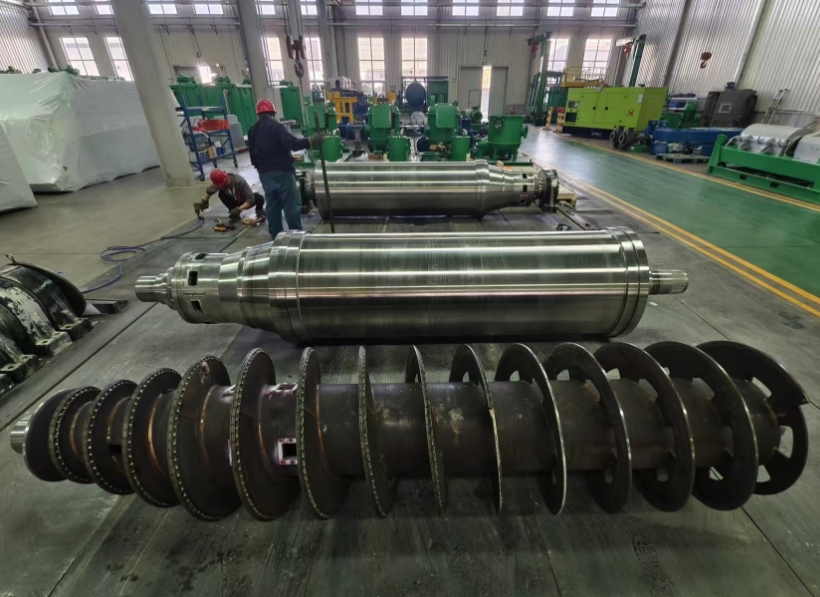
If cracks, severe wear, or structural damage are detected, timely repair or refurbishment is required. Repaired surfaces should be properly machined and finished to maintain smooth solids conveying and operational stability. In practical applications, however, strengthening wear protection in advance is generally more effective and economical than post-repair maintenance.
2) Scroll Body
The scroll body is designed to match the cylindrical and conical geometry of the bowl. It forms the main structural support for the helical flights while also housing the feed distribution system.
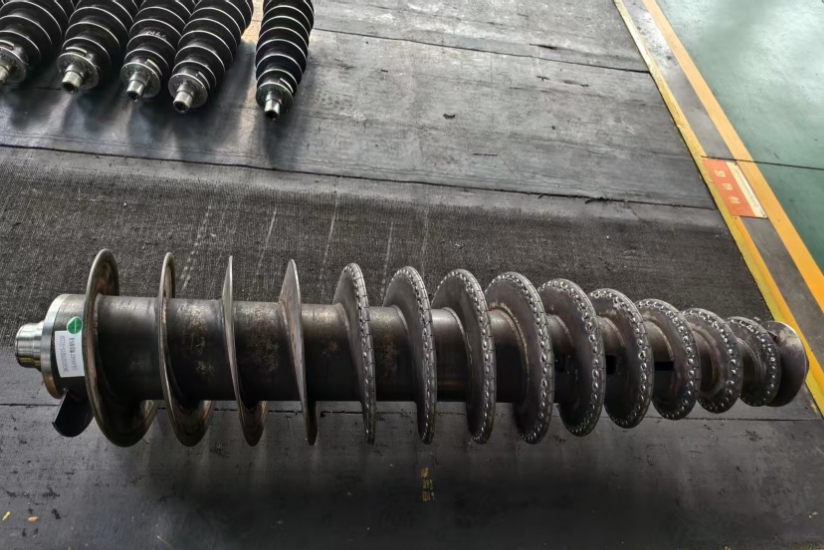
The internal cavity of the scroll serves as the feed chamber, where incoming slurry is introduced into the centrifuge before being distributed into the rotating bowl. The structural strength and balance accuracy of the scroll body are critical to ensuring reliable operation under high rotational speeds and centrifugal forces.
3) Feed Distribution and Feed Port Position
The feed slurry enters the decanter centrifuge through the scroll and is distributed into the bowl through multiple feed ports. The position and design of these feed ports are carefully optimized to achieve the best separation performance.
By locating the feed ports closer to the central or rear section of the scroll, the effective clarification zone and drying zone inside the bowl can be extended. This provides longer residence time for solids settling and dewatering, improving liquid clarity while reducing the moisture content of the discharged solids.
Optimized feed distribution also minimizes turbulence inside the bowl, helping to maintain stable separation efficiency and reducing wear on internal components.