Both filter presses and Decanter centrifuges are widely used in sludge dewatering and solid-liquid separation, but they differ significantly in their working principles, suitable applications, operational flexibility, and maintenance needs. The following outlines key distinctions and insights drawn from years of practical design experience and user feedback regarding decanter centrifuges:

1. Applicable Media: Not All Sludge Is Equal
Decanter centrifuges are not universally effective across all sludge types.
In particular, sludge with high inorganic content, such as fly ash, poses challenges.
Fly ash tends to adhere to the inner wall of the centrifuge drum, creating resistance and clogging the discharge system.
This issue has been observed in real-life cases, such as a municipal sewage plant in northern China, where the centrifuge failed to operate normally and had to be replaced—leading to significant operational loss.
Filter presses, on the other hand, are generally more suitable for inorganic-rich sludge, offering a more robust performance in handling fine, sticky, or high-density materials like fly ash.
2. Feed Control and Process Stability
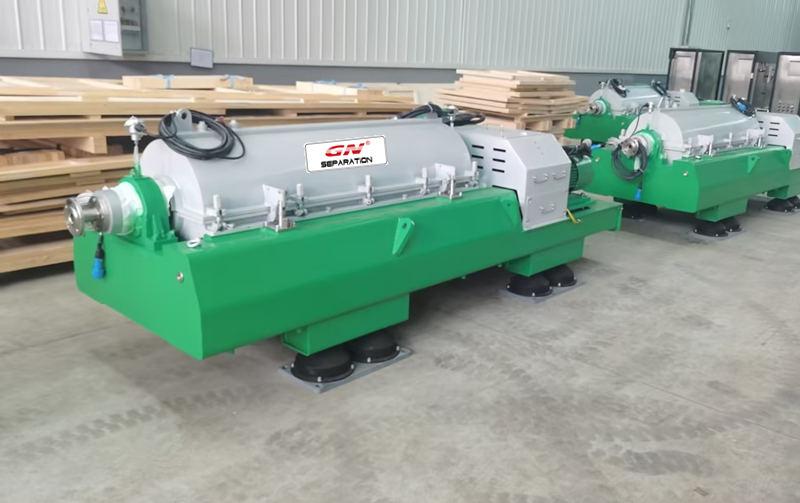
Offer automated control capabilities, such as adjusting torque and scroll speed in response to variations in feed concentration.
However, these adjustments often still require manual calibration and monitoring.
Changes in feed consistency can affect performance, potentially leading to reduced dewatering efficiency or torque overload.
Filter presses:
Typically operate in batch mode, making them less sensitive to feed fluctuations.
However, they often require longer cycle times and manual intervention for unloading and cleaning.
3. Solid Recovery Rate and Chemical Usage
Decanter centrifuges generally achieve a high solid recovery rate:
This makes them ideal where continuous processing and automation are priorities.
However, not all low-recovery-rate applications are unsuitable—recovered filtrate can be recycled to the head of the treatment process for further separation.
Chemical dosage:
One point of contention is the amount of polymer (e.g., PAM) required.
In a 150,000 m³/day municipal treatment plant using a decanter centrifuge, the measured PAM consumption was approximately 1.7–2.0 kg per ton of dry sludge, which is considered efficient.
In contrast, filter presses in some cases consume up to 20 kg per ton of dry sludge, though this figure can vary widely depending on sludge composition and filtration efficiency.