As the world seeks sustainable alternatives to fossil fuels, biofuel has emerged as one of the most promising renewable energy sources. Derived from a wide range of organic materials such as used cooking oil, palm oil mill effluent (POME), animal fats, and microalgae, biofuels are praised for their ability to reduce greenhouse gas emissions and promote circular economy models. However, producing high-quality biofuel involves complex separation processes to remove solids, moisture, and impurities. This is where decanter centrifuges come into play as a critical piece of equipment in biofuel processing plants.
Efficient Feedstock Purification
One of the primary applications of decanter centrifuges in the biofuel industry is the purification of raw feedstocks. For example, used cooking oil (UCO), a popular feedstock for biodiesel, often contains food residues, water, and various contaminants. A decanter centrifuge can continuously process large volumes of UCO, separating out solids and water, thus delivering cleaner oil suitable for downstream transesterification into biodiesel. This not only enhances product quality but also helps reduce the load on refining and filtration systems.
Oil Recovery from Palm Oil Sludge and POME
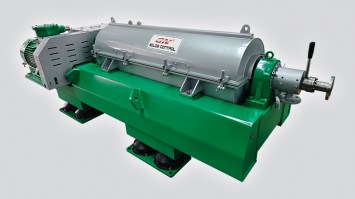
In palm oil-producing regions, large volumes of oily waste such as palm oil sludge and POME are generated daily. These byproducts still contain significant amounts of recoverable oil. Three-phase decanter centrifuges (Tricanters) are widely used in this context to separate oil, water, and solids in a single continuous process. By recovering valuable oil from sludge and wastewater, producers can not only improve biofuel yields but also significantly reduce environmental pollution and wastewater treatment costs.
Enhancing Sustainability and Operational Efficiency
Decanter centrifuges offer multiple advantages in the biofuel industry: high separation efficiency, continuous operation, low maintenance, and adaptability to various feedstocks. Their robust design allows them to handle abrasive solids and high-viscosity materials, making them suitable for harsh operating conditions. In addition, integrating decanters into the biofuel production line helps reduce the need for chemical additives, minimizes waste generation, and improves overall plant efficiency. As biofuel production continues to scale, decanter centrifuges will remain a key enabler of sustainable and cost-effective operations.