The decanter centrifuge is driven by the main motor, and the differential shaft and the auxiliary motor are coaxially connected. The speed of the main and auxiliary motors is controlled by the inverter, and the DC bus of the two are connected in parallel, and the three-phase power is input to the main inverter. Continue reading
Tag Archives: Decanter centrifuge
Solution to the bearing over-heat problem of Decanter centrifuge
The most important part of the decanter centrifuge is the transmission part, and the bearing is an important part of the transmission part. Generally, experienced centrifuge purchasers will ask the manufacturer a series of questions about the bearing when purchasing the centrifuge.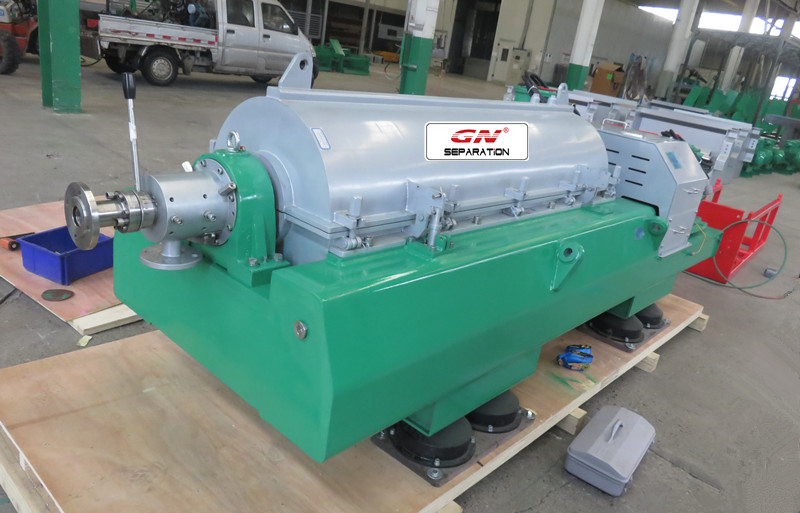
Solutions to Corrosion Defects of Decanter Centrifuge
After the warranty period, the decanter centrifuge corrosion defects and their treatment methods are as follows:
The necessity of periodic inspection of decanter centrifuge
The necessity of periodic inspection of a Decanter centrifuge is crucial for maintaining its optimal performance, ensuring safety, and prolonging its service life. Here are some key reasons why periodic inspection is necessary:
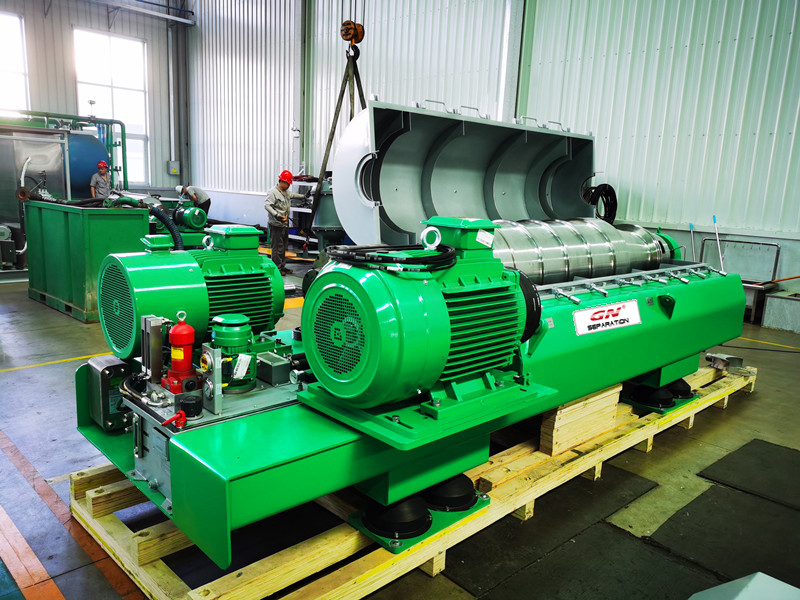
- Maintenance of Optimal Performance:
- Efficiency: Regular inspections help ensure that the centrifuge operates at its designed efficiency. Over time, wear and tear can reduce its effectiveness, but timely maintenance can mitigate these effects.
- Separation Quality: The primary function of a Decanter centrifugeis to separate solids from liquids. Periodic inspections ensure that the separation process remains effective, maintaining product quality.
- Safety Considerations:
- Preventive Measures: Regular inspections can identify potential hazards before they lead to accidents. This includes checking for worn-out parts, leaks, or other safety issues.
- Compliance with Regulations: Many industries have strict safety regulations regarding equipment maintenance. Periodic inspections help ensure compliance with these regulations.
- Prolonging Service Life:
- Early Detection of Problems: Through regular inspections, potential issues can be detected early, allowing for proactive repairs before they escalate into more serious problems.
- Cost Savings: Preventive maintenance is generally more cost-effective than reactive repairs. By catching problems early, you can avoid more expensive repairs or even the need for replacement parts.
- Environmental Impact:
- Leak Prevention: Leaks from worn-out seals or other parts can lead to environmental contamination. Regular inspections help prevent these leaks, protecting both the environment and the company’s reputation.
- Resource Efficiency: Ensuring the centrifuge operates efficiently also means minimizing waste and energy consumption, which aligns with sustainable practices.
- Regulatory Compliance and Documentation:
- Record Keeping: Keeping detailed records of inspections and maintenance activities is important for regulatory compliance and can be useful for troubleshooting and performance tracking.
- Audit Preparedness: Regular inspections and maintenance records can help prepare the company for audits or inspections by regulatory bodies.
- Improved Reliability and Uptime:
- Minimizing Downtime: Preventive maintenance reduces the likelihood of unplanned downtime, ensuring that the centrifuge is available when needed.
- Consistency in Output: Regular inspections help maintain consistent performance, ensuring that the centrifuge produces reliable results over time.
In summary, periodic inspection of a decanter centrifuge is essential for maintaining its performance, ensuring safety, prolonging its service life, protecting the environment, and complying with regulations. By establishing a robust maintenance schedule and adhering to it, companies can optimize their centrifuge’s performance and minimize operational disruptions.
Causes of thermal cracks in decanter centrifuges
The thermal cracks generated in the Decanter centrifuge all occur and develop along the junction of the dendrites in the weld metal. The most common situation is that cracks in the middle of the weld along the length of the weld are sometimes distributed between two dendritic grains inside the weld.
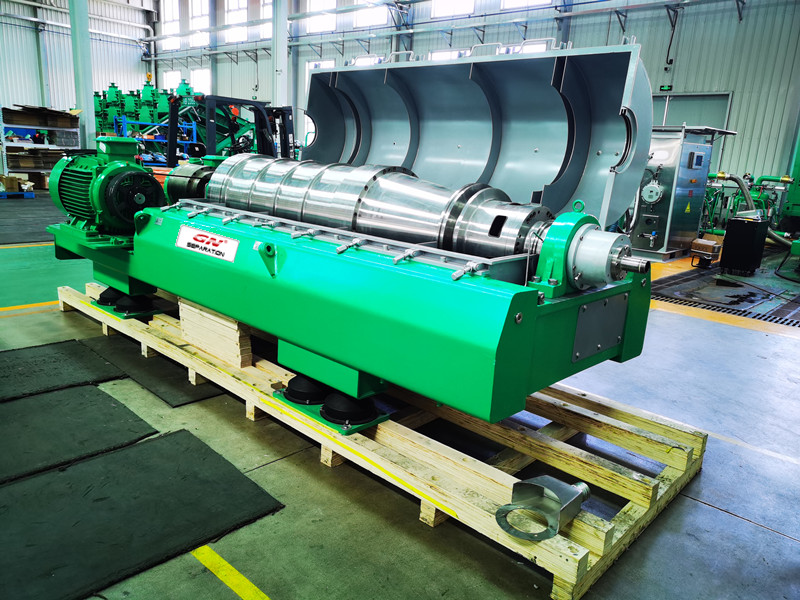
Decanter centrifuge hot cracks are all produced at the grain boundary, which shows that the grain boundary is a “weak zone” during the crystallization process of the weld.
The reason for the formation of this weak zone is because in the metal crystallization process, there are more brittle impurities enriched in the grain boundary, and these impurities have a lower melting temperature. For example, FeS can be formed when the metal to be welded contains high sulfur content, and FeS and iron form a low-melting eutectic with a melting point of only 988 degrees. For example, in the later stage of the solidification process of the welded metal, the low melting point eutectic is pushed to the grain boundary to form a so-called “liquid interlayer.” In the process of metal transition from liquid to solid, the weld is subjected to tensile stress due to volume shrinkage. Under the action of tensile stress, cracks may be formed in this liquid interlayer, that is, thermal cracks.
Therefore, the reason for the thermal cracking of the centrifuge is that the weld is subjected to the existence of a liquid interlayer, and the weld is subjected to tensile stress during the crystallization process. The existence of a liquid interlayer is the root cause of thermal cracks, and tensile stress is a necessary condition for thermal cracks. From the above analysis, it can be seen that not the entire crystallization process will produce hot cracks, but only in the later stage of the crystallization process, near the solidus line is the dangerous temperature zone for hot cracks.
Drilling Mud dewatering centrifuge Unit for Europe Client
GN Separation have successfully delivered two drilling mud dewatering decanter centrifuge systems to a European client. Each system is carefully designed with a GNLW364FT decanter centrifuge, a chemical dosing system, and a mud feed screw pump, all conveniently housed in standard containers for improved transportation efficiency and easy installation. This innovative packaging approach greatly enhances the equipment’s maintainability and protection, ensuring long service life and minimal downtime. Continue reading
How to Address Gear Problems in Decanter Centrifuges
Decanter centrifuges contain numerous gears, and if any one of them encounters an issue, it can affect the entire operation. Based on the experience of decanter centrifuge manufacturers, common faults in centrifuge gears can generally be summarized as follows.
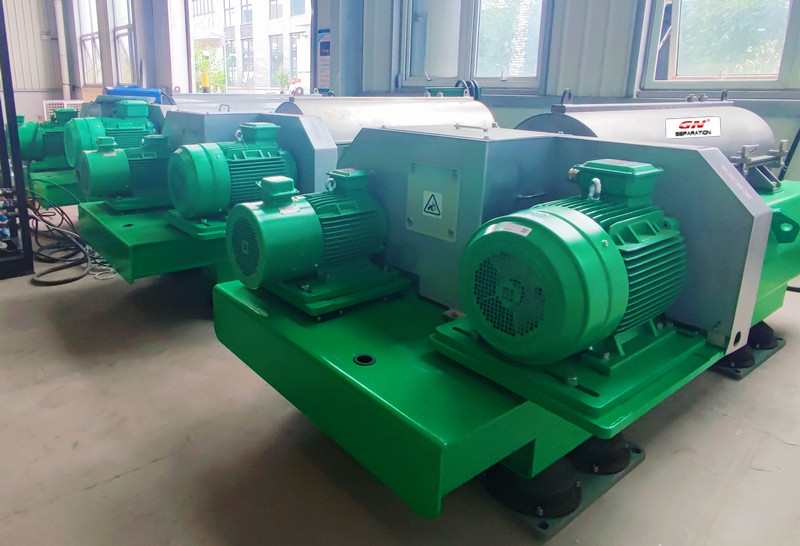
Common gear faults in decanter centrifuges include tooth surface wear, gluing and scratching on the tooth surface, tooth surface contact fatigue, bending fatigue, and broken teeth. Causes of these issues include manufacturing defects, improper assembly, inadequate lubrication, overload, and operational errors. Due to the structure and operating principles of gears, their vibration signals are often complex. Diagnosing gear vibration issues requires analysis in both the time domain and frequency domain. Whether the gear is in a normal or abnormal state, the change frequency of the gear meshing stiffness will always be present. Therefore, diagnosis should focus on the gear meshing frequency component. Due to the complex nature of gear signals, faults significantly impact the vibration signal. Amplitude modulation and frequency modulation can lead to numerous sideband structures in the gear vibration spectrum, which necessitates a detailed analysis during fault diagnosis.
The characteristic fault frequencies of centrifuge gears are as follows:
- Normal Frequency Spectrum: The spectrum typically shows the 1X frequency and meshing frequencies of all rotating shafts. Speed sidebands appear on both sides of the gear meshing frequency, with small peak values.
- Gear Wear: The gear’s natural frequency may appear, with a sideband at the rotational speed of the shaft containing the worn gear. With significant wear, a sideband with a higher peak may emerge near the meshing frequency.
- Eccentric Gears: Sidebands with higher amplitudes near the meshing frequency indicate gear eccentricity or shaft misalignment. As the load increases, so does the peak at the meshing frequency.
- Misalignment of Gears: This issue typically excites vibrations at the second or higher harmonics of the meshing frequency. Peaks at the 2X or 3X meshing frequency spectrum may increase, with side frequencies separated by the rotational speed.
GN Separation Will Show Decanter Centrifuge at Mongolia Mining International 2024
As the golden shades of autumn sweep across the Mongolian landscape, the mining sector prepares for one of its most anticipated events: the Mongolia Mining International 2024 Exhibition. Taking place in the heart of Ulaanbaatar, this esteemed exhibition serves as a global hub for mining professionals, equipment manufacturers, and technology providers to showcase their latest innovations and build strategic partnerships. This year, GN Separation is set to introduce its advanced ore screening and tailings dewatering solutions, underscoring its commitment to sustainability and efficiency in the mining industry.
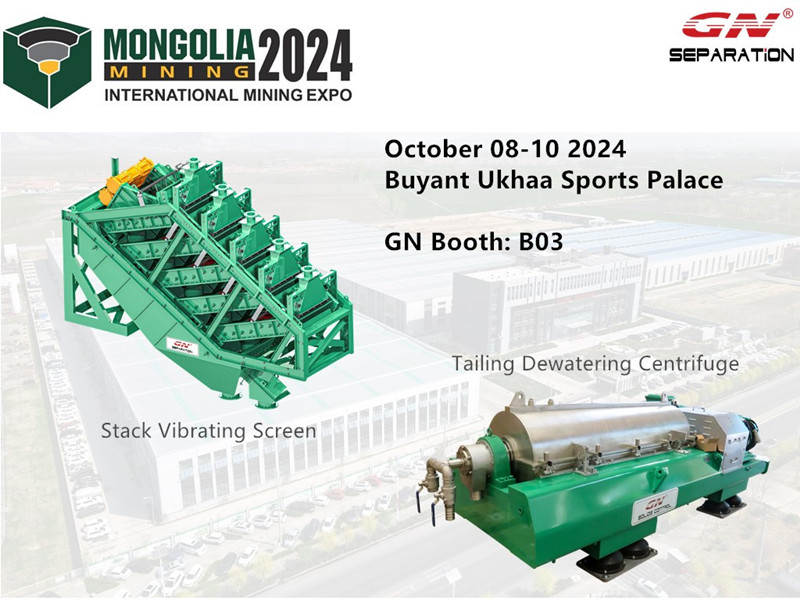
GN Booth Information:
- Expo Date: 08-10 October 2024
- Venue: Buyant Ukhaa Sport Palace, 10th Khoroo, Khan Uul, Ulaanbaatar, Mongolia
- GN Booth: B03
At the forefront of GN Separation’s display will be two core technologies:
Stack Vibrating Screen
Engineered for high-capacity screening with enhanced precision and durability, the Stack Vibrating Screen utilizes a unique stacked configuration. This design allows multiple decks in a compact structure, significantly boosting screening capacity while minimizing spatial requirements. Suitable for processing a wide array of minerals such as coal, iron ore, gold, and copper, it can be customized to meet the specific needs of various mining operations.
Tailings dewatering centrifuge
Complementing the Stack Vibrating Screen, the Tailings Dewatering Centrifuge optimizes mineral recovery and reduces environmental impact. By applying centrifugal force, it efficiently separates liquids from solid particles in tailings, producing a drier, more manageable material. Its robust design ensures long-lasting performance and low maintenance costs, making it an ideal solution for modern tailings management.
Beyond just innovation, GN Separation is committed to promoting sustainable mining practices, offering solutions that not only increase operational efficiency but also reduce environmental harm. With water conservation and waste reduction becoming critical concerns for the industry, GN’s technologies provide practical answers to these challenges. The 2024 exhibition is set to be a pivotal moment for GN Separation, presenting an opportunity to connect with a global audience and establish new collaborations for future growth.
Methods to eliminate hidden dangers in decanter centrifuge operation
As we all know, the decanter centrifuge’s speed is very high, and the safety hazards are particularly important, and serious threats to human lives, so we must pay more attention to the principles of use when operating decanter centrifuge . Continue reading
Introduction of the correct operation process of decanter centrifuge
The decanter centrifuge is a critical piece of equipment used in various industries for solid-liquid separation, including wastewater treatment, mining, and chemical processing. To ensure optimal performance and longevity of the centrifuge, it is essential to follow the correct operation procedures. Proper operation not only maximizes separation efficiency but also reduces the risk of equipment damage and unscheduled downtime. This guide outlines the key steps and best practices for the safe and efficient operation of a decanter centrifuge, helping operators achieve consistent results while minimizing operational costs. Continue reading