The Decanter Centrifuge is an advanced separation device known for its low energy consumption, stable performance, and effective solid-liquid separation. It is widely used across various industries including chemical processing, food production, salt refining, mining, and pharmaceuticals. The decanter centrifuge is capable of separating a wide range of materials. Due to its versatility and proven application success, it is advisable to consult with technical experts when selecting a model to ensure the best match for specific processing needs.
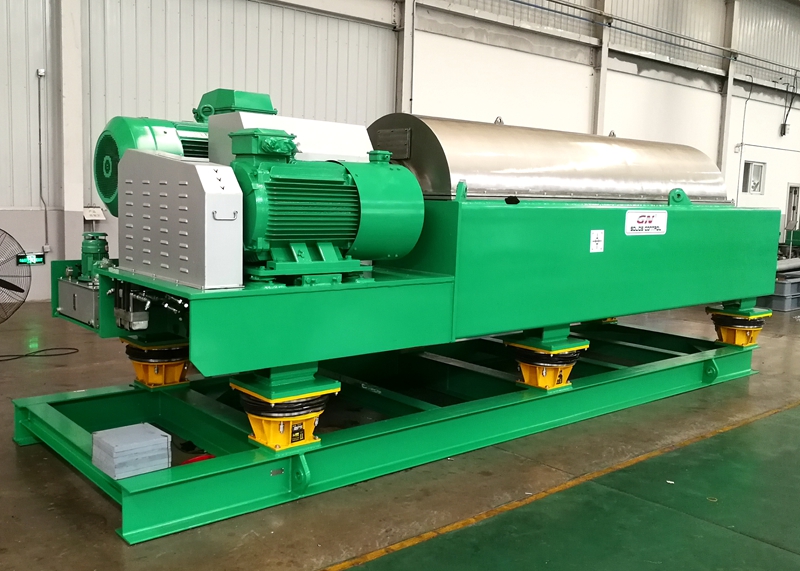
In operation, the Decanter Centrifuge performs a fully continuous cycle that includes feeding, dewatering, washing, and solids discharge, offering high production efficiency and a high degree of automation. These features make it a preferred solution in modern industrial processes requiring continuous and reliable separation.
Given its separation principle and mechanical structure, the Decanter Centrifuge is highly material-specific. Proper material analysis and testing are essential during the model selection phase to verify suitability and performance for the intended application.
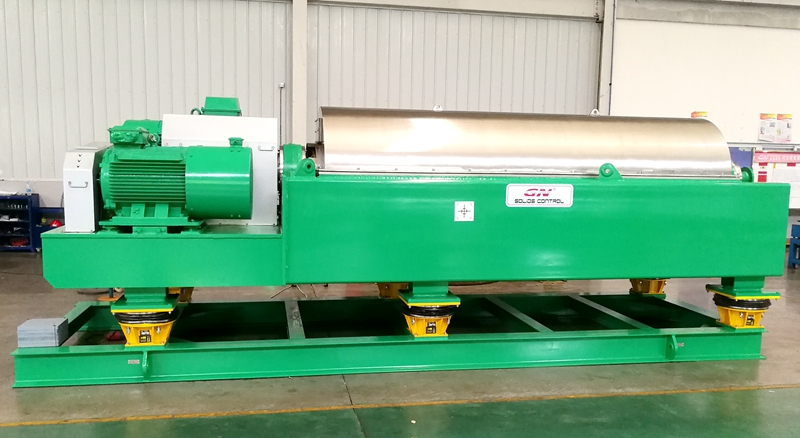
The working principle of the Decanter Centrifuge is based on centrifugal sedimentation. The slurry (a mixture of solids and liquid) enters the rotating drum through a feed tube and a screw conveyor inlet. As the drum spins at high speed, centrifugal force causes heavier solid particles to move outward and deposit on the inner wall of the drum. Meanwhile, the screw conveyor, which rotates at a slightly different speed than the drum, continuously scrapes and transports the accumulated solids toward the discharge port.
The clarified liquid exits the drum through adjustable weir plates. The differential gear mechanism is key to enabling the relative motion between the drum and the screw conveyor. The differential casing is connected to the drum, while its output shaft is connected to the screw. The input shaft, driven by an auxiliary motor, applies a braking torque. This torque, through the planetary gears, precisely controls the screw’s rotation, ensuring a consistent and efficient separation process.