The decanter centrifuge is an advanced separation device known for its low energy consumption, stable operation, and high separation efficiency. It is widely used in industries such as chemical processing, food production, salt refining, mining, and pharmaceuticals. With successful applications across various materials, model selection should be guided by material analysis and expert consultation to ensure optimal performance.
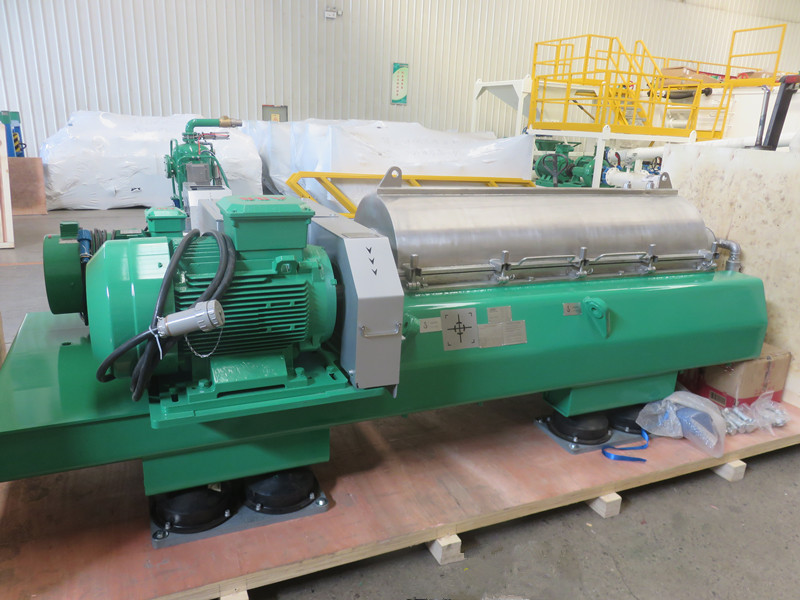
Operational Process and Automation
Decanter centrifuges excel in continuous separation processes, seamlessly performing feeding, dewatering, washing, and discharge in an automated workflow. This high degree of automation enhances production efficiency and process stability.
Separation Principle and Material Suitability
Due to its unique separation mechanism and structural characteristics, decanter centrifuges require careful material-specific adjustments. Before selecting a model, material testing and analysis should be conducted to confirm its applicability and separation efficiency.
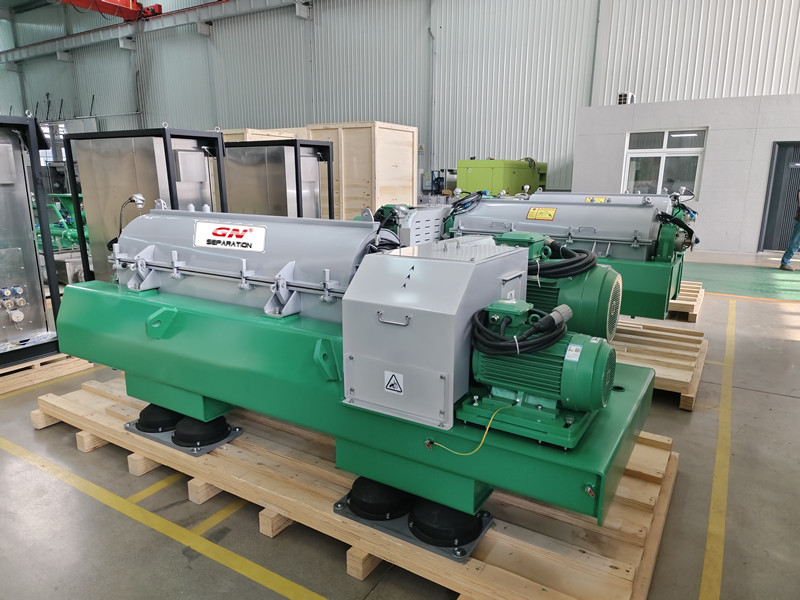
How the Decanter Centrifuge Works
Material Entry & Acceleration
The mud-water mixture enters the rotating drum through the feed pipe and screw discharge port.
The main motor generates high-speed rotation, creating strong centrifugal force.
Separation Process
Heavier solid particles settle onto the inner wall of the drum due to centrifugal force.
The screw conveyor (spiral blades) moves relative to the drum, continuously scraping and transporting the separated solids toward the slag discharge port.
The clarified liquid exits the drum through the weir plate opening.
Differential Mechanism & Torque Transfer
The relative movement between the screw conveyor and the drum is controlled by a differential mechanism.
The differential housing is connected to the drum, while the output shaft is connected to the screw conveyor.
The input shaft is powered by an auxiliary motor, which applies braking torque.
Through a planetary gear system, torque is precisely transferred to the screw conveyor at a controlled speed ratio, ensuring continuous separation and discharge.
Types of Decanter Centrifuges
Horizontal Decanter Centrifuges (Spiral Discharge & Sedimentation Type)
Vertical Sedimentation Centrifuges
Each type is designed for specific separation applications, requiring proper selection based on material properties and processing requirements.