In decanter centrifuge operation and process design, it is essential to determine whether a material can be separated by two-phase (solid–liquid) separation or requires three-phase (solid–liquid–liquid) separation.
This choice depends primarily on the physical properties of the feed—especially the presence of immiscible liquids with different densities.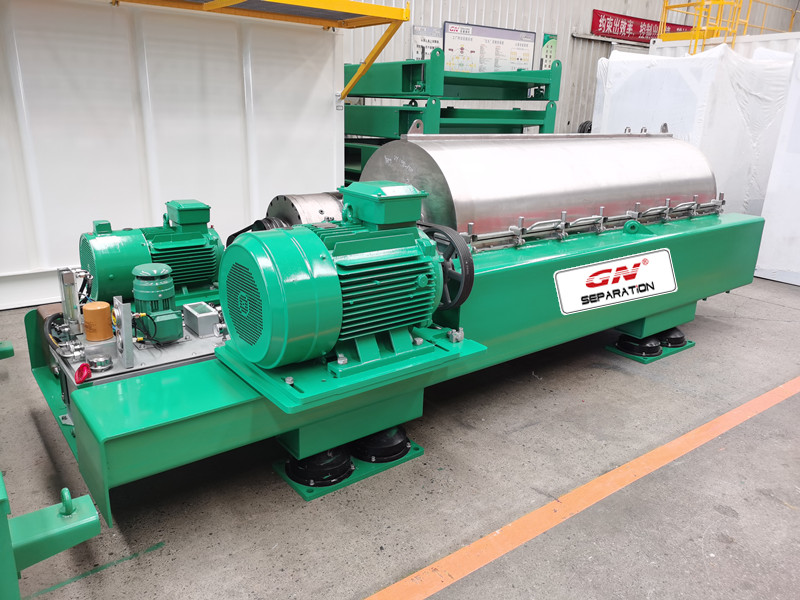
When the feed contains only one liquid phase with suspended solids, a two-phase decanter centrifuge is sufficient.
When the feed contains solids plus two immiscible liquids (typically light and heavy phases such as oil and water), a three-phase decanter centrifuge is required.
Two-Phase Decanter Centrifuge (Solid–Liquid Separation)
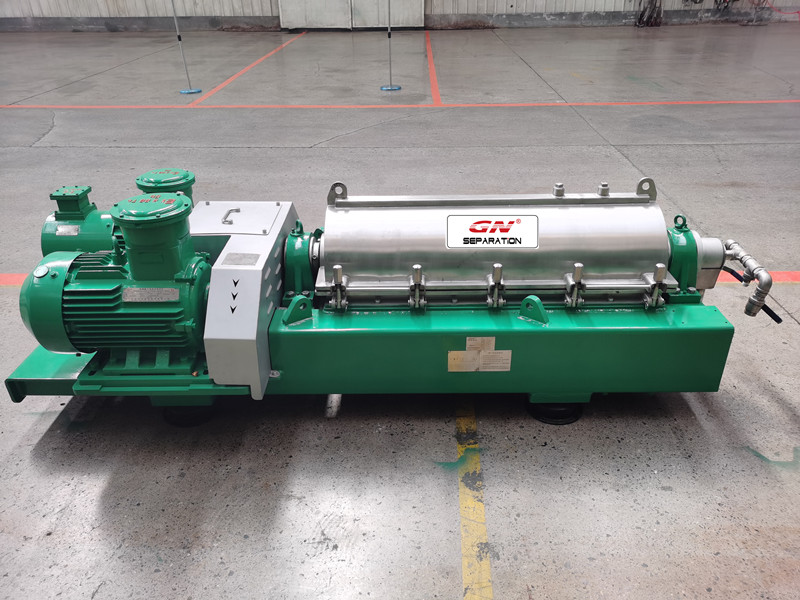
A two-phase decanter centrifuge separates suspended solids from a single liquid phase.
The machine consists of a frame, housing, main bearings, rotating bowl, scroll (screw conveyor), differential, drive system, and control system. The bowl and scroll rotate in the same direction at high speed with a small differential speed.
The feed slurry enters the scroll hub through the feed pipe and is distributed into the rotating bowl. Under centrifugal force, the higher-density solids migrate outward and form a sediment layer on the bowl wall. The scroll continuously conveys the settled solids toward the conical end of the bowl, where they are discharged through the solids outlet.
The clarified liquid forms an inner liquid layer and flows toward the cylindrical end of the bowl, overflowing through adjustable weirs and leaving the centrifuge via the liquid discharge outlet.
Result: separation into one solid phase + one clarified liquid phase
Three-Phase Decanter Centrifuge (Solid–Liquid–Liquid Separation)
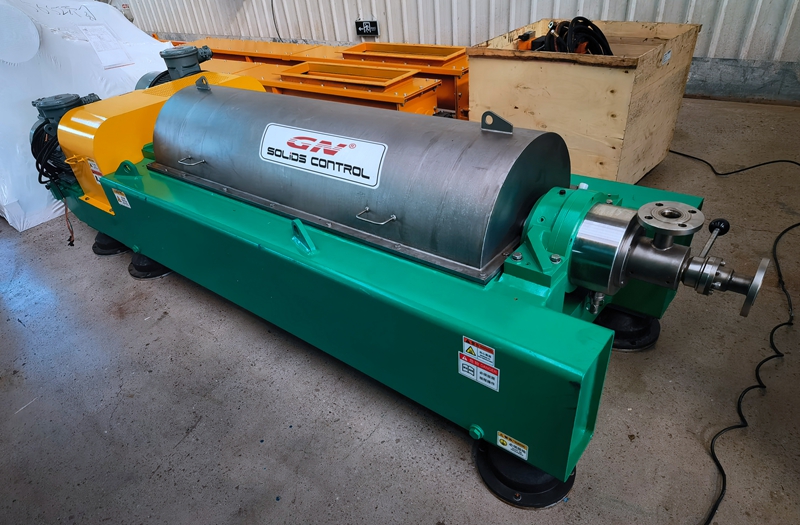
A three-phase decanter centrifuge separates one solid phase and two immiscible liquid phases with different densities (typically heavy liquid and light liquid).
The mechanical structure and rotation principle are similar to a two-phase decanter: the bowl and scroll rotate in the same direction at high speed with a differential speed, and the feed enters through the scroll hub into the bowl.
Under centrifugal force, three concentric layers form from the bowl wall inward:
Outer layer: high-density solids
Middle layer: heavy liquid phase (e.g., water)
Inner layer: light liquid phase (e.g., oil)
The scroll conveys the deposited solids to the conical end for discharge through the solids outlet. The two liquid phases flow separately toward the cylindrical end and are discharged continuously through independent liquid outlets (separate weirs or centripetal pumps), achieving simultaneous three-phase separation.
Result: separation into one solid phase + heavy liquid phase + light liquid phase
Key Practical Difference
Two-phase decanter: solids + one liquid
Three-phase decanter: solids + two immiscible liquids
Selection basis: presence of two liquid phases with sufficient density difference and immiscibility
Typical examples:
Two-phase: sludge dewatering, drilling mud clarification
Three-phase: oil sludge treatment, olive oil processing, animal fat recovery