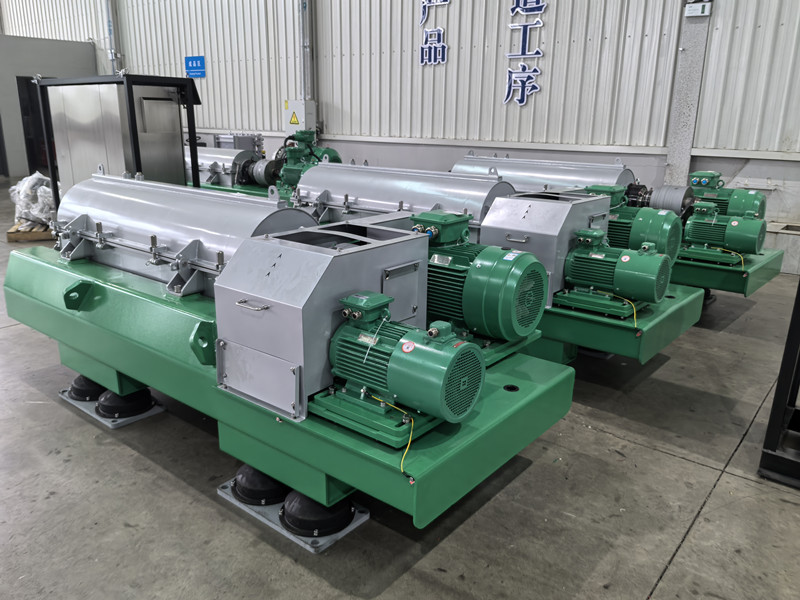
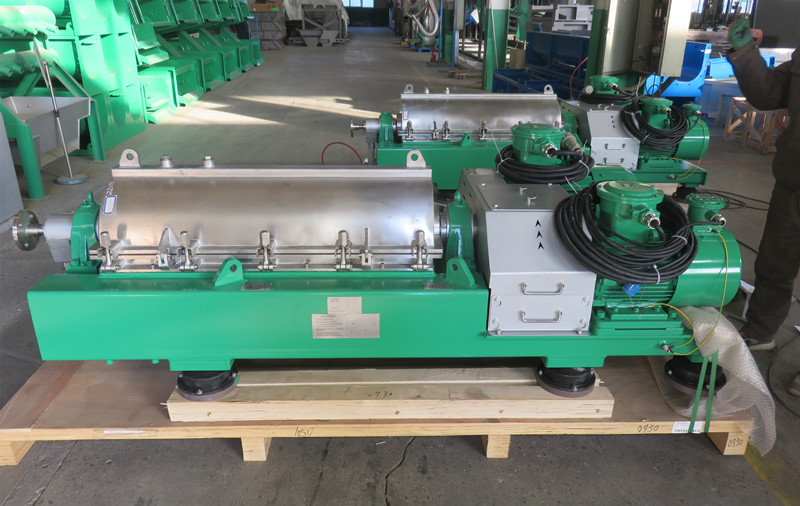
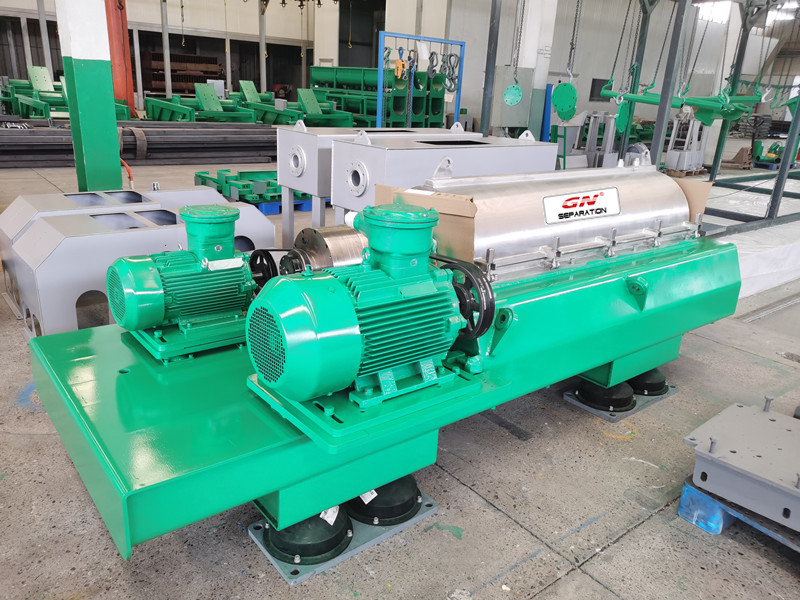
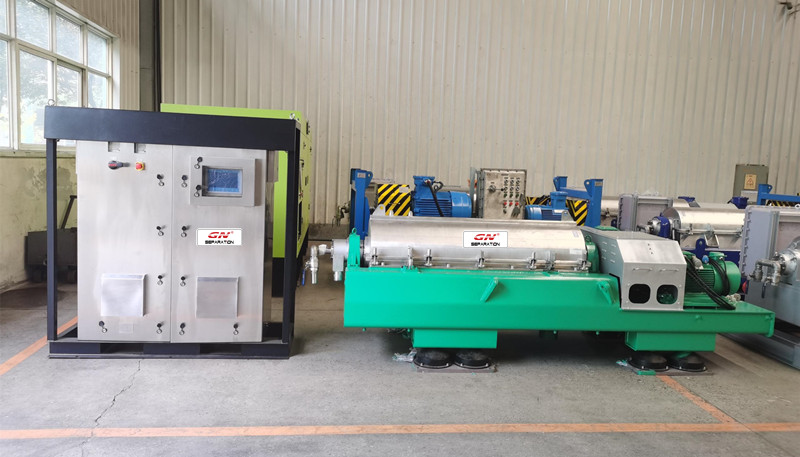
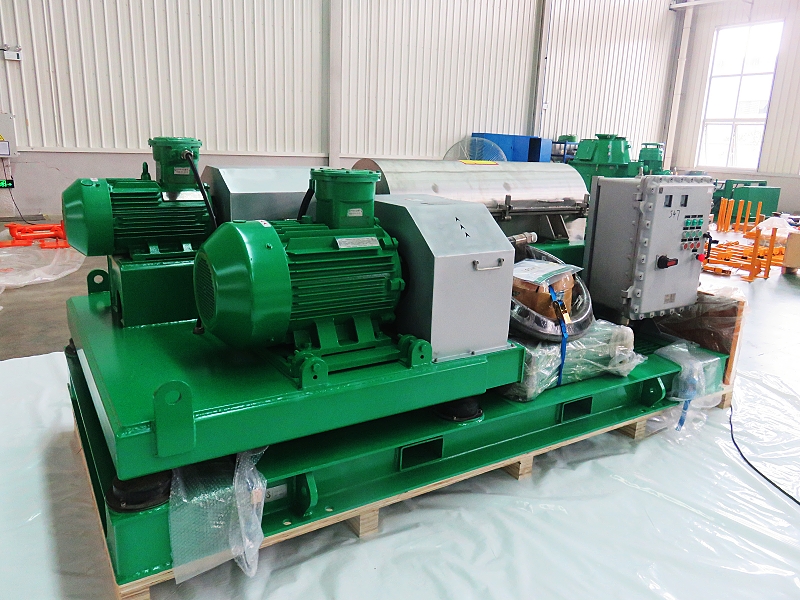
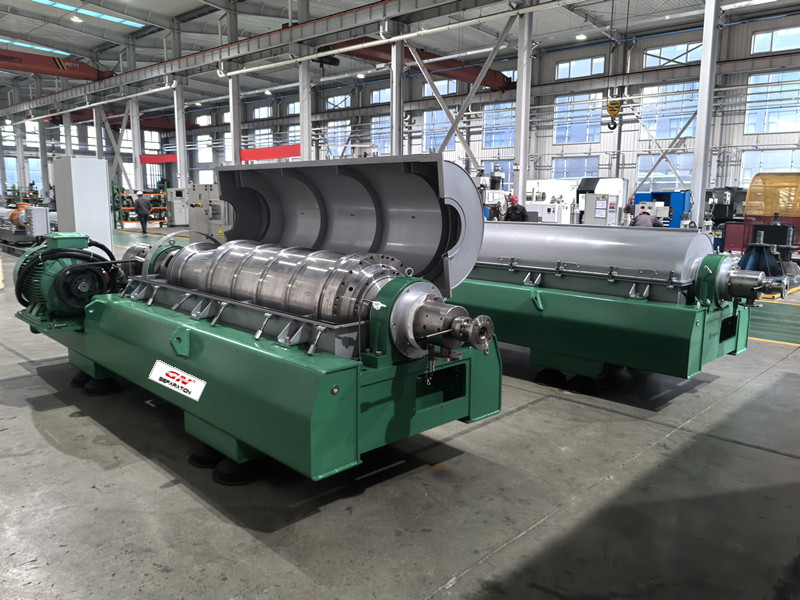
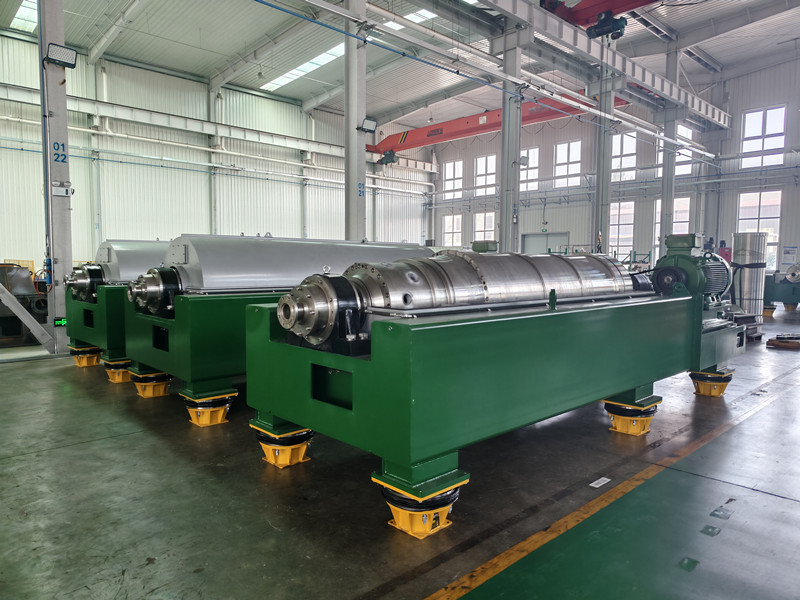
A horizontal spiral sedimentation centrifuge, commonly known as a decanter centrifuge, is an efficient piece of centrifugal separation equipment designed for continuous solid-liquid or liquid-liquid-solid separation. Based on structure and function, decanter centrifuges can be divided into horizontal spiral filter centrifuges and horizontal spiral sedimentation centrifuges. Continue reading
The Importance of Dynamic Balancing in Decanter Centrifuge Manufacturing
Dynamic balancing is a crucial step in the manufacturing of a decanter centrifuge, directly determining its stability, performance, and lifespan. Because a centrifuge operates at extremely high rotational speeds, even a tiny imbalance in the rotating assembly can lead to serious vibration, noise, premature bearing wear, or even structural damage.
At GN Separation, every decanter centrifuge goes through a three-stage dynamic balancing process to ensure excellent performance and long-term reliability.
- First Stage – Medium-Speed Balancing (around 1800 RPM):
In this stage, both the bowl and scroll assemblies are tested at medium speed to eliminate initial imbalance and ensure that the components are stable before high-speed rotation. This helps technicians identify any unbalance caused by machining or assembly tolerances early on. - Second Stage – High-Speed Balancing (Operating Speed):
The next step involves balancing the rotating assembly at the centrifuge’s actual working speed, which can exceed 3,000 RPM depending on the model. This high-speed test simulates real working conditions and detects even the smallest residual imbalance that only appears at high rotational speeds. - Third Stage – Complete Machine Balancing:
Finally, after the whole centrifuge is fully assembled, the entire unit undergoes integrated dynamic balancing in GN’s dedicated balancing workshop. This final step ensures the centrifuge runs smoothly and stably under full-speed operation, minimizing vibration and extending the life of bearings and seals.
Many manufacturers only perform low-speed or single-stage balancing, but GN’s three-stage balancing process provides a much higher level of accuracy and safety. During each stage, vibration amplitude and phase angle are carefully measured, and corrections are made until the unit meets strict balance standards.
Through this comprehensive process, GN ensures that every centrifuge operates with minimal vibration, lower noise, and maximum reliability. Dynamic balancing is not just a quality checkpoint — it’s a core guarantee of precision engineering and long-lasting performance.
Efficient Mud Management: Advanced Dewatering System for U.S. Construction Projects
1. Background: The Challenge of Construction Mud Disposal
In large-scale construction projects, especially in urban areas of the United States, managing slurry and drilling mud is a major environmental and operational challenge. Construction mud typically contains fine solids, sand, silt, and chemical additives that make it difficult to dispose of directly. Traditional settling tanks are inefficient and require large space, while uncontrolled discharge can lead to pollution and penalties. To achieve cleaner operations and meet strict environmental standards, advanced solid-liquid separation technology has become an essential part of construction site management.
2. The Dewatering Solution: Vibrating Screen and Decanter Centrifuge Combination
The combination of a dewatering vibrating screen and a big bowl decanter centrifuge provides an efficient and compact solution for mud treatment. The vibrating screen performs the first-stage separation by removing coarse particles and sand from the slurry. This reduces the solids loading on subsequent equipment. The partially clarified liquid then enters the decanter centrifuge, which uses high rotational speed and strong centrifugal force to separate fine solids and recover clean water.

The big bowl decanter centrifuge, featuring a large diameter and optimized bowl length ratio, delivers higher capacity and drier solids discharge. It ensures continuous operation with automatic control and minimal operator intervention. Together, this system significantly reduces waste volume, lowers disposal costs, and allows water to be recycled for reuse in drilling or construction processes.

3. Environmental and Economic Benefits
By adopting this dual-stage dewatering system, construction contractors can achieve sustainable operations while improving profitability. The recovered water can be reused onsite, reducing fresh water consumption by up to 80%. The dry solids can be easily transported for landfill or further treatment, minimizing handling costs.
Moreover, the entire process is enclosed and automated, ensuring clean, safe, and compliant site management. With increasing emphasis on green construction and circular resource use, integrating vibrating screens and big bowl decanter centrifuges has become a preferred choice for many U.S. engineering and infrastructure projects.
Hydrovac Slurry Separation System for America Client
In modern construction and utility installation projects—such as hydrovac excavation and horizontal directional drilling (HDD)—efficiently managing slurry waste is essential for both operational productivity and environmental responsibility. GN Separation specializes in the design and manufacture of advanced waste management systems engineered specifically for hydrovac slurry and directional drill mud treatment. Continue reading
GN Solids Vacuum Pump for Middle Eastern Client
GN Separation has recently completed the assembly and final packaging of a batch of Vacuum Pumps. These fully pneumatic units, engineered for high-efficiency conveying, are now en route to a key client in the Middle East. They will be deployed to handle oily sludge, one of the most challenging byproducts of oil and gas operations.
A Pneumatic Powerhouse: How the GN Solids Vacuum Pump Works
At the core of this technology lies a 100% air-driven pump designed to transport a wide range of materials safely and reliably. Unlike conventional mechanical pumps with rotating parts prone to abrasion and frequent maintenance, GN’s Vacuum Pump operates entirely on compressed air. This eliminates the need for electricity, significantly reducing maintenance costs and improving safety in hazardous environments.
The pump operates on a cyclical “suction–discharge” process. During suction, compressed air creates a strong vacuum that draws in materials such as liquids, slurries, powders, or aggregates. Once the chamber is filled, the airflow reverses, discharging the collected material through an outlet pipe. This simple yet robust design ensures consistent performance, even with highly viscous or abrasive media.
Versatile Applications Across Industries
The GN Solids Vacuum Pump has proven its value in diverse industries, offering efficiency and safety in applications where traditional pumps often fail:
Environmental Protection – Sludge Pool Cleanup
In wastewater and effluent treatment, sedimentation tanks often accumulate heavy, viscous sludge. GN Separation’s vacuum pump streamlines removal, transferring sludge directly to dewatering units or disposal sites while reducing manual labor and safety risks.
Mining – Reliable Slurry Transfer
Mining slurries containing abrasive minerals pose major challenges for mechanical pumps. The vacuum pump’s clog-resistant design and strong suction capacity make it ideal for moving high-solid-content mixtures over distance with minimal downtime.
Oil & Gas – Oily Sludge Management
For the Middle Eastern project, the pump will be used to extract oily sludge from pits and separators. The pneumatic design is intrinsically safe, preventing ignition risks in explosive environments while ensuring compliance with international safety standards.
Sustainable Engineering with Practical Benefits
By replacing energy-intensive pumping methods with a pneumatic, wear-resistant design, the GN Solids Vacuum Pump reduces reliance on fossil fuels, minimizes waste, and aligns with global sustainability goals. At the same time, clients benefit from lower operating costs, longer service life, and reliable performance under harsh conditions.
GN Separation’s commitment to combining robust engineering with environmental responsibility continues to drive innovation in industrial material handling, delivering practical solutions for the world’s most demanding applications.
The Role of Centrifuges in the Biogas Industry
Efficient Solid-Liquid Separation
In the biogas industry, one of the most important processes is the separation of solids from liquids in feedstock and digestate. Centrifuges play a critical role in this stage by using high rotational force to achieve rapid and efficient solid-liquid separation. Compared with traditional sedimentation or filtration methods, centrifuges are faster, require less space, and can handle large volumes of slurry with varying solid concentrations. By separating solids effectively, centrifuges help operators reduce the load on downstream equipment, improve the consistency of the digester input, and maintain stable operating conditions.

Enhancing Biogas Production and Quality
The performance of a biogas plant largely depends on the stability of the anaerobic digestion process. Excessive solids or non-uniform feed can negatively impact microbial activity, lowering methane yield. Centrifuges ensure that the organic feedstock is properly conditioned before digestion, creating an optimal environment for bacteria to produce biogas. After digestion, centrifuges also remove excess water from digestate, producing a concentrated solid fraction that can be used as organic fertilizer. This dual function—pre-treatment of feedstock and post-treatment of digestate—helps biogas facilities enhance overall energy recovery while minimizing waste.
Supporting Sustainability and Cost Efficiency
Biogas plants are not only about renewable energy generation but also about sustainable waste management. Centrifuges contribute to this sustainability by reducing the volume of digestate that requires disposal, lowering transportation and handling costs. The dewatered solids can be further processed into soil amendments, while the clarified liquid can be treated or reused, minimizing environmental impact. In addition, modern centrifuges are designed for energy efficiency and durability, which helps operators reduce long-term operational expenses. By combining process reliability with environmental benefits, centrifuges have become indispensable equipment for biogas facilities worldwide.
Separation Function and Operation of the Decanter Centrifuge
The decanter centrifuge performs centrifugal separation on two- or three-phase liquid-solid heterogeneous mixtures with different densities. During operation, the main motor drives the two pulleys simultaneously, which in turn drive the bowl and the helical screw through a gear or cycloidal pin-wheel differential. This ensures a fixed relative differential speed between the bowl and the screw, allowing the materials to be separated efficiently at high speed. Continue reading
Centrifuge Demand in Europe and Southeast Asia
Mature and Specialized Demand in Europe
In Europe, centrifuge demand is well-established and highly specialized. Industries such as municipal wastewater treatment, pharmaceuticals, food processing, and fine chemicals rely on centrifuges for precise separation tasks. European buyers focus on automation, energy efficiency, and compliance with strict regulations such as ATEX and CE. This means they prefer premium equipment that guarantees reliability, safety, and long-term service support. Although the market is competitive and relatively saturated, replacement demand and technological upgrades remain steady, ensuring continuous opportunities for advanced centrifuge solutions.

Expanding Demand in Southeast Asia
Southeast Asia shows a very different picture. Rapid industrialization, urban growth, and stricter environmental regulations are driving strong demand for centrifuges in wastewater treatment, palm oil processing, and the food industry. Municipal projects require cost-effective sludge dewatering, while palm oil mills depend on centrifuges to improve oil recovery and meet international quality standards. Customers in the region are generally price-sensitive, often prioritizing durability, easy maintenance, and affordability. However, there is also a growing trend toward automation and energy-efficient solutions, especially in government projects and large corporations.
Outlook and Strategic Approach
Comparing both regions, Europe represents a stable, technology-driven market, while Southeast Asia is a fast-growing, price-sensitive market. For centrifuge manufacturers, this requires a dual strategy: offer innovative, certified systems for Europe, and provide cost-effective, durable solutions in Southeast Asia with strong local partnerships.
At GN Separation, we are committed to serving both regions with a wide range of centrifuge technologies—from high-performance models that meet European standards to robust and affordable systems designed for the dynamic needs of Southeast Asia. By adapting to local requirements, we aim to support industries worldwide in achieving efficient and sustainable separation.
The Role of Centrifuges in the Food Industry: Oil, Sugar, and Beyond
In the food processing industry, efficiency and product quality are paramount. Centrifuges have become indispensable equipment for various food sectors, particularly in oil and sugar processing. Their ability to separate solids and liquids quickly and efficiently helps manufacturers maintain high productivity while ensuring consistent product quality.
1. Oil Extraction and Refining
Centrifuges play a crucial role in edible oil production, including palm oil, soybean oil, and sunflower oil. During the extraction process, raw oil often contains impurities such as water, plant residues, and fine solids. A decanter centrifuge or disc stack centrifuge efficiently separates these impurities, producing a clear, high-quality oil. Additionally, centrifuges are used in the refining stage to remove trace solids and moisture, which improves shelf life and stability, while reducing energy consumption compared to traditional settling tanks.

2. Sugar Processing
In sugar manufacturing, centrifuges are used to separate sugar crystals from the syrup during the crystallization process. By rapidly spinning the mixture, centrifuges remove molasses from the sugar crystals, yielding a purer final product. This not only enhances sugar quality but also increases overall yield and reduces manual labor. Different types of centrifuges, such as batch or continuous models, can be selected based on plant scale and production needs, making them versatile for various sugar types, including cane and beet sugar.
3. Applications in Other Food Products
Beyond oil and sugar, centrifuges are widely applied in the extraction of plant-based products, dairy processing, and fruit juice clarification. For example, in herbal extraction, centrifuges efficiently separate plant residues from liquid extracts, maintaining bioactive compound integrity. In dairy, they clarify milk and whey, improving product quality and consistency. Similarly, fruit juice producers use centrifuges to remove pulp and sediment, delivering clear juice with extended shelf life.
Overall, centrifuges are a vital component in modern food processing, helping manufacturers optimize production, improve product quality, and reduce operational costs. Their versatility makes them indispensable across multiple food sectors, from oil and sugar to dairy and beverages.
GNLW364-VFD Sludge Dewatering Centrifue for Overseas Environmental Company
GN Separation has successfully completed factory testing of two GNLW364-VFD decanter centrifuges, which are now en route to an overseas environmental company for use in municipal sludge dewatering projects. Continue reading
Figure 1. Dynamic Balancing