The scroll (also called screw conveyor) is a core internal component of a decanter centrifuge. It is installed inside the rotating bowl and rotates at a differential speed relative to the bowl. Its primary function is to continuously convey the settled solids toward the conical end for discharge. The design, material, and operating parameters of the scroll directly affect the separation efficiency, solids dryness, and overall performance of the decanter centrifuge.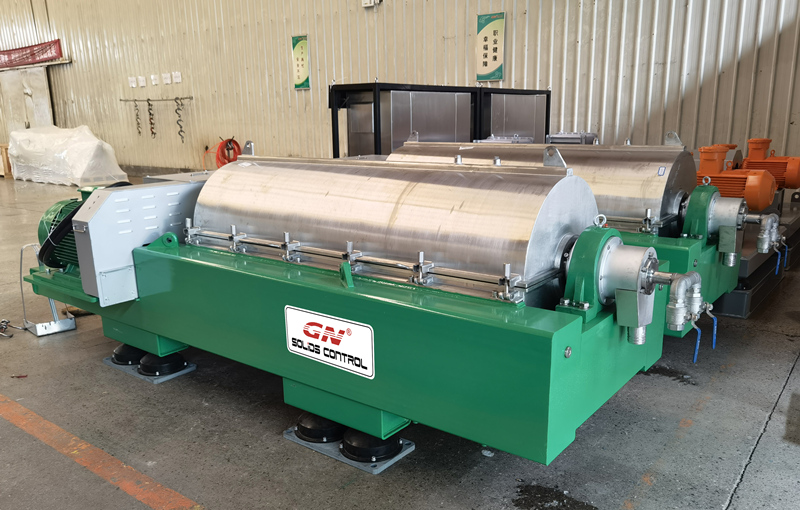
The scroll mainly consists of helical flights, a scroll body, and a feed distribution chamber.
1) Helical Flights
The helical flights are designed as continuous spiral blades with a constant pitch, typically with a right-hand orientation. Unlike an external screw conveyor, the scroll does not transport material independently; instead, it works under high centrifugal force inside the rotating bowl. The solids are first deposited on the inner wall of the bowl and then conveyed by the scroll due to the differential speed between the scroll and the bowl of decanter centrifuge.
Since the flights are in direct contact with high-density solids, they are subject to continuous wear. As wear increases, the conveying efficiency decreases, which may result in higher moisture content in the discharged solids. Therefore, wear protection and regular inspection are critical. If cracks, severe wear, or damage are observed, timely repair is required. Repaired surfaces should be properly finished to ensure smooth conveying and stable operation. In practical operation, strengthening wear protection is more effective than post-repair treatment.
2) Scroll Body
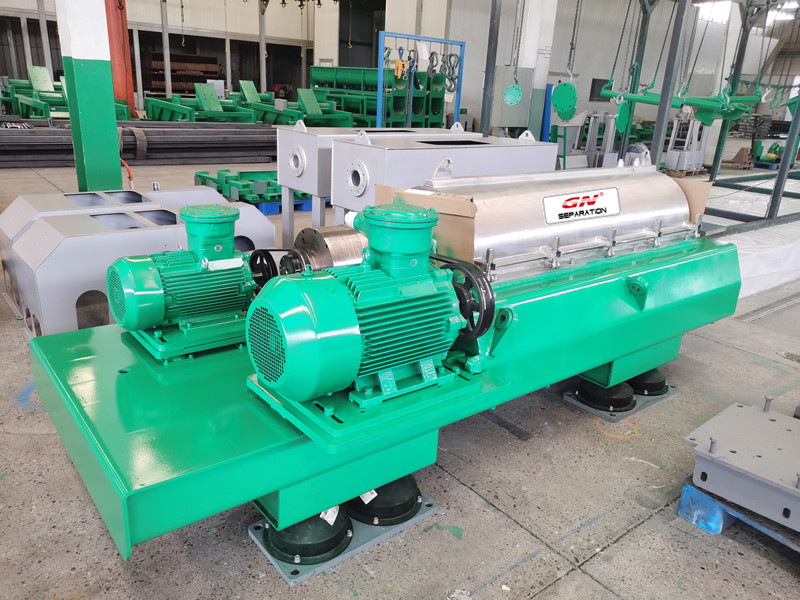
The scroll body is typically designed to match the cylindrical and conical sections of the bowl. It forms an internal structure that supports the flights and houses the feed distribution system. The internal cavity serves as the feed chamber, where the incoming slurry is introduced into the decanter centrifuge.
3) Feed Distribution and Position
The feed enters the centrifuge through the scroll and is distributed into the bowl via multiple feed ports. The position of these ports is carefully designed to optimize separation performance. By placing the feed ports toward the central or rear section of the scroll, the effective clarification and drying zones are extended. This allows sufficient residence time for solids to settle and be dewatered, resulting in improved clarity of the liquid phase and lower moisture content in the discharged solids.