Decanter centrifuges are particularly effective for liquid-solid separation processes involving fine particles, minimal density differences between phases, and otherwise challenging separation tasks. They are also widely applied in two-phase (liquid-liquid) and three-phase (liquid-liquid-solid) separation scenarios. As a result, they have become an essential part of many modern industrial processes.
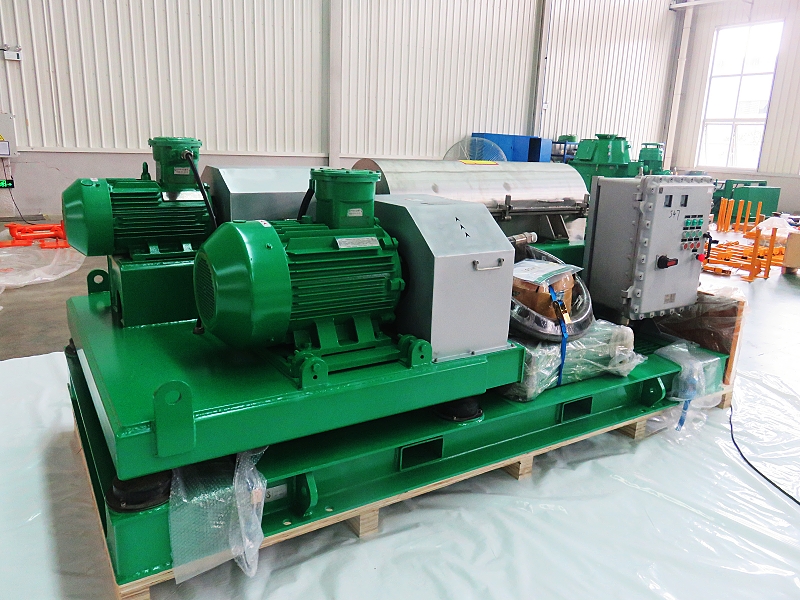
Based on structure and separation principles, decanter centrifuges can generally be categorized into horizontal and vertical types. Among these, horizontal decanter centrifuges are more commonly used due to their versatility and operational advantages. The key characteristics of current usage can be summarized as follows:
Wide Application Range
Decanter centrifuges are employed across various industries requiring solid-liquid separation. They are capable of handling solid-phase dewatering, liquid clarification, two-phase liquid separation, and even complex three-phase separation (such as liquid-liquid-solid and liquid-solid-solid systems). Additionally, they can be used for particle size classification in suspensions.
Adaptability to Different Material Types
These machines can effectively separate suspensions with solid particle sizes ranging from 0.005 mm to 2 mm, and solid concentrations between 0.5% and 40%, demonstrating strong adaptability to a broad range of materials.

Continuous and Automated Operation
Under standard operating conditions, decanter centrifuges function continuously and automatically, offering high throughput, stable performance, and low operating and maintenance costs.
Enhancing the Working Efficiency of Decanter Centrifuges
From practical application experience, it is evident that decanter centrifuges significantly enhance production efficiency and reduce operating costs, which has driven their widespread adoption in the market. Continued integration of advanced technologies, particularly from international sources, has further propelled the development of the equipment and the industry as a whole.
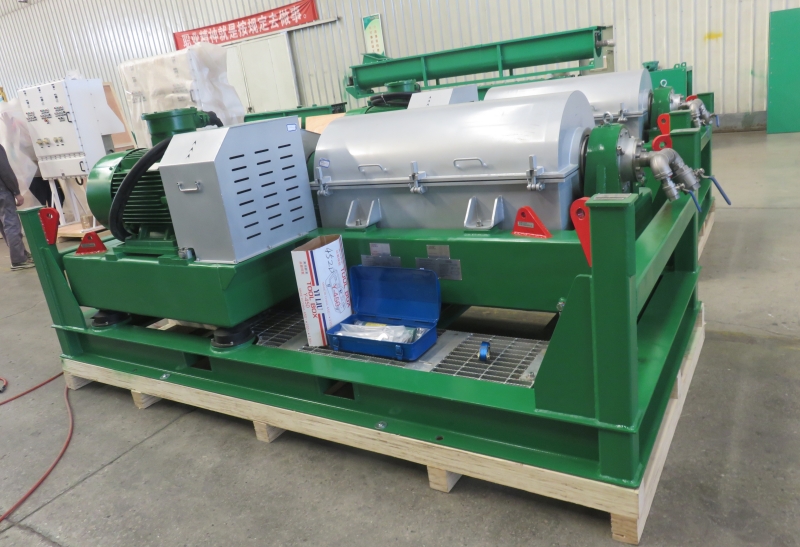
To further increase the working power and efficiency of a Decanter centrifuge, several key areas have been the focus of innovation and optimization:
Improvement of Technical Parameters
Continuous R&D efforts have led to optimized bowl and screw designs, improved differential speeds, and enhanced control systems to boost separation performance.
Advancement in Separation Technology
Process optimization through advanced control algorithms and intelligent automation helps maintain ideal separation conditions and adapt to variable feed characteristics.
Material Selection and Wear Protection
Ongoing research in the development and application of wear-resistant and corrosion-resistant materials—such as duplex stainless steels and ceramic coatings—greatly extends equipment lifespan and reliability in harsh environments.
Enhanced Safety Features
Safety and protection mechanisms, including overload sensors, vibration monitors, and fully enclosed explosion-proof designs, ensure stable and secure operation, especially in hazardous applications.
Thanks to continuous research, technological innovation, and engineering improvements, the overall technical level of domestically produced decanter centrifuges has significantly advanced. These improvements not only enhance working efficiency but also ensure safer, more reliable, and cost-effective operation across diverse industrial sectors.
As industries demand higher levels of separation efficiency and automation, decanter centrifuges will continue to evolve and play a critical role in modern solid-liquid separation processes.