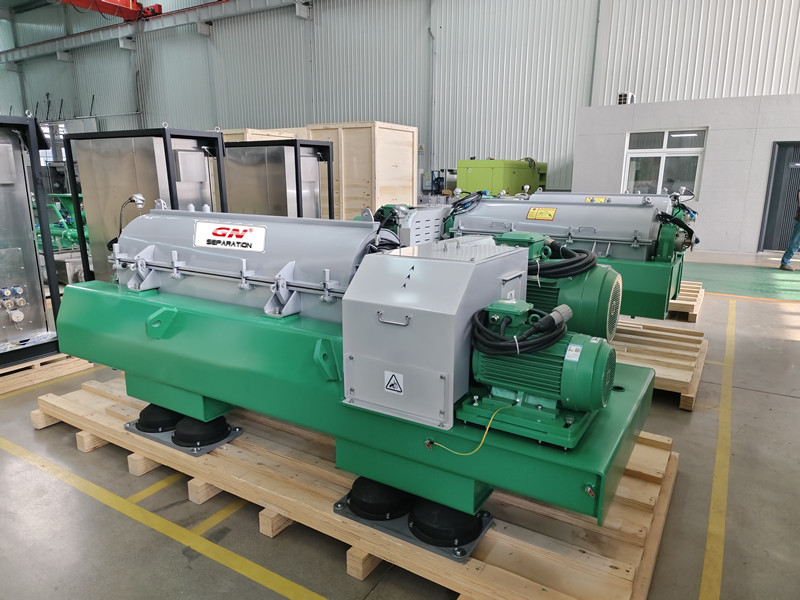
A decanter centrifuge is a highly efficient piece of centrifuge equipment. Decanter centrifuges are generally divided into two types: horizontal spiral filter centrifuges and horizontal spiral sedimentation centrifuges. Some users, however, have reported encountering issues with slow dehydration performance during operation. The specific problem involves an increase in the amount of material accumulating in the drum, which results in prolonged dehydration times and insufficient drying. This phenomenon is not uncommon, and in this article, I will analyze and attribute the possible causes of this issue.

To address the problem effectively, users must first understand the concept of filtration rate and the various factors that influence the filtration efficiency of a decanter centrifuge.
In response to this problem, the following solutions and considerations can be referenced:
Adjustment of the Rotating Bowl in the decanter centrifuge: In certain cases, adjusting the forward movement of the rotating bowl (within safe operational limits) may improve the dehydration process. This adjustment is effective when the material being processed is non-corrosive or only mildly corrosive.
Using a Multiple Dehydration Process: A small amount of material can be dewatered in multiple stages, reducing the load on the centrifuge during each cycle. This approach minimizes the volume of material processed per cycle and allows for more efficient separation, resulting in better dehydration. This technique is particularly effective when large volumes of material need to be processed, as it ensures that each stage of dehydration is more thorough.
Washing Viscous Materials: If the material being processed is highly viscous, it may impede the centrifuge’s ability to achieve effective dehydration. In such cases, it is recommended to wash the material within the process’s parameters. Washing the material can help reduce its viscosity, improving the centrifuge’s overall performance.
Improving Solid Phase Particle Size: The size of the solid particles in the material being processed can significantly impact the dehydration performance of the decanter centrifuge. If the particle size is too large or uneven, the centrifuge may struggle to achieve effective separation. In such cases, one solution is to add a flocculant to facilitate particle agglomeration. The flocculated particles are easier to separate, which improves the centrifuge’s performance.
The above methods address various factors that can influence the dehydration efficiency of decanter centrifuges. By understanding and implementing these adjustments, users can improve the centrifuge’s performance, ensuring faster dehydration times and better overall results.