The working principle of a 3-phase decanter centrifuge is straightforward, and its operation is relatively simple. This type of centrifuge is widely used across multiple industries, as it can continuously separate solids, heavy liquid, and light liquid in a fully enclosed system. Through its specially designed mechanical structure, solid–liquid–liquid three-phase separation is achieved efficiently and reliably. Continue reading
Category Archives: Decanter Centrifuge
Attentions for Installing a Decanter Centrifuge
Proper installation and safety management are critical when installing a decanter centrifuge. A decanter centrifuge is a high-speed rotating machine, and failure to follow correct safety procedures may result in serious injury, equipment damage, or production interruptions. Therefore, all personnel involved in installation, commissioning, operation, and maintenance must strictly follow safety guidelines and technical instructions. Continue reading
GN Decanter Centrifuge System for Africa Oilfield Waste Water Treatment
GN Separation has recently delivered a complete decanter centrifuge treatment system to an oilfield waste water facility in Africa, strengthening the region’s capability to manage drilling waste and produced water in a more efficient and environmentally compliant manner. The project showcases GN’s modular design concept, integrating several core process packages into a unified, easy-to-deploy solution. Continue reading
Decanter Centrifuge Failure Causes and Diagnostics
Brief Working Principle
A decanter centrifuge separates phases by using high centrifugal force to stratify materials with different specific gravities. The heavy (solid) phase is conveyed by a rotating screw conveyor toward the conical end and discharged, while the light phase overflows through the liquid outlet. This allows continuous, automatic solid–liquid separation.
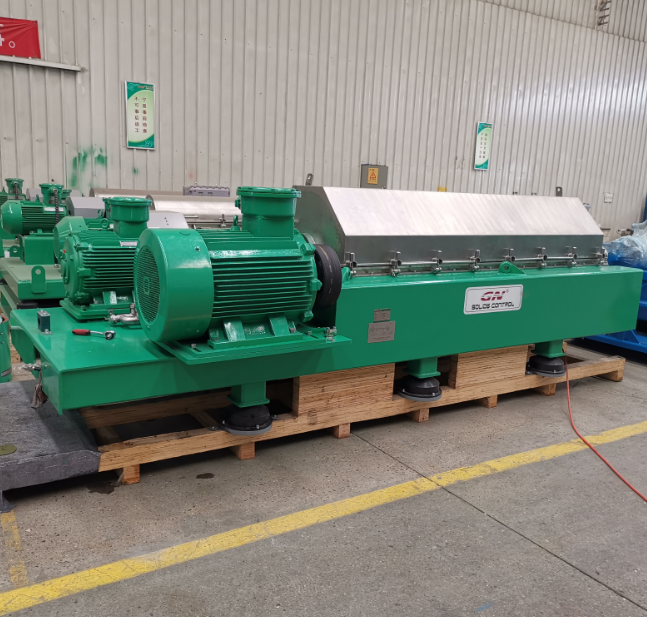
Typical Causes of Vibration, Instability and Failure During Feeding
1、Bowl speed too high during feed start-up
If the bowl speed is excessive while introducing feed to decanter centrifuge, the slurry can be unevenly dispersed across the bowl. That uneven mass distribution produces unbalanced centrifugal forces and causes vibration. Consequence: increased bearing loads, accelerated wear, and potential mechanical damage.
2、Uneven or changing feed concentration
Fluctuations in feed solids concentration or non-homogeneous feed lead to uneven distribution of the mother liquor in the bowl. This produces oscillation and unstable operation. Consequence: repeated transient imbalances that may worsen over time and damage the equipment.
3、Rigid or insufficiently isolated foundation
A rigid mounting or poor vibration isolation transmits imbalance to the entire structure and amplifies vibration. Consequence: stronger oscillation, higher loads, and reduced centrifuge lifespan.
4、Electrical and control faults
Damaged power switches, wiring issues, incorrect supply voltage, or blown fuses disrupt motor control and may cause failed starts or abrupt shutdowns. Consequence: unreliable operation and possible electrical damage.
5、Auxiliary system failures (air pressure, filter cloth, actuators)
Low air-compressor pressure, faulty pressure switches, or closed or blocked pneumatic valves prevent pneumatic components from operating normally. Loose or slipping filter-cloth tension mechanisms cause tracking issues. Consequence: operational alarms, improper dewatering, and mechanical stress.
6、Ignored alarms or interlock responses
Alarms often indicate abnormal conditions. Ignoring them may cause small issues to escalate into major problems. Consequence: severe equipment damage or unexpected downtime.
7、Mechanical wear or protection failures
Worn bearings, damaged seals, degraded wear parts, or faulty protection devices (vibration sensors, torque limiters) increase vibration risk. Consequence: higher failure risk and increased repair frequency.
Recommended Diagnostic Checklist
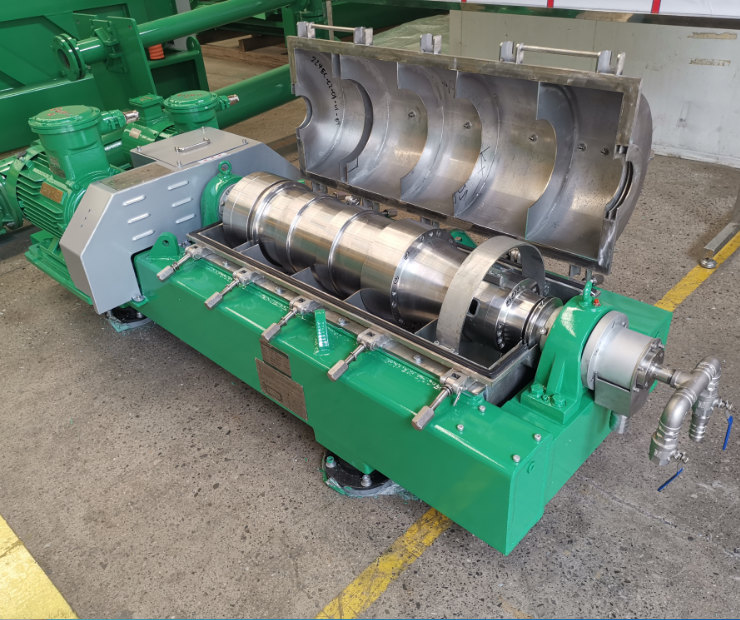
1、Visual and mechanical checks: Verify bowl and scroll speeds, ensure slow-speed feeding, check feed homogeneity, and inspect foundation isolation.
2、Monitor operating parameters: Check vibration, temperature, torque, and motor current.
3、Electrical and control checks: Inspect power switches, fuses, wiring, panel settings, and interlocks.
4、Auxiliary system checks: Confirm air pressure, valve function, filter cloth tension, and pneumatic components.
5、Component inspection: Evaluate bearings, seals, wear liners, and the base.
Corrective Actions and Preventive Measures
Operational controls: ramp up bowl speed slowly during start-up, use consistent feed concentration, and avoid air entrainment.
Foundation: ensure proper vibration isolation and tighten anchor bolts.
Instrumentation: maintain vibration and temperature monitoring with automatic shutdown limits.
Maintenance: perform scheduled inspection and replacement of bearings, seals, and wear parts.
Training: ensure operators follow correct start-up, shutdown, and alarm-handling procedures.
Summary
Most failures and vibrations during operation originate from imbalance caused by excessive bowl speed, unstable feed, poor foundations, electrical faults, or auxiliary system issues. Proper operation, stable feed conditions, monitoring, and preventive maintenance can significantly reduce failure risk and ensure long-term stable performance of the decanter centrifuge.
GNLW454GT Mud Dewatering Centrifuge for Hydrovac Slurry Treatment
GN Separation is proud to introduce the GNLW454GT Mud Dewatering decanter centrifuge, an advanced and robust solution engineered for the efficient treatment of hydrovac slurry and directional drilling mud. Designed to meet the growing demands of utility construction, trenchless drilling, and hydroexcavation projects, this high-performance decanter centrifuge plays a central role in modern waste management systems where reliable solids–liquid separation is essential. Continue reading
Decanter Centrifuges Specialized in Sludge Dewatering Ready for Inspection
This week, GN Separation completed the assembly of four GNLW224 decanter centrifuges along with their corresponding polymer dosing units at its manufacturing facility. The equipment is scheduled for final inspection and acceptance testing by an overseas client next week. Continue reading
Introduction of the main characteristics of a decanter centrifuge
The decanter centrifuge is one of the separation machines. Compared with other centrifuges, it has its special features, and these special features also enable the centrifuge to better improve the efficiency of the work, so it It can bring convenience to the entire project process.
Regarding its special features, there are mainly the following points:
1. The work of the decanter centrifuge is mainly relying on centrifugal force, which drives the entire centrifuge to perform high-speed work, so that it can exert its effects. It has a relatively strong effect on the dehydration of solids. During the entire dehydration process, manual operations are not required, and fully automated operations can be realized only by controlling it to a certain extent.
- When we are using the decanter centrifuge, it is very necessary to protect and maintain it. The maintenance requirements of the decanter centrifuge are relatively ordinary. Only simple care is required at ordinary times. It requires frequent and complicated maintenance.
- The decanter centrifugelooks like a compact machine in appearance, it occupies a relatively small space, and the entire distribution equipment is relatively simple. During the use of the decanter centrifuge, as long as it is routinely protected and maintained, its service life will be very long.
GN high-end CNC lathes, CNC centers, and CNC gantry milling machines can better ensure the machining accuracy of centrifuge parts. In terms of the dynamic balance of the decanter centrifuge, in addition to the ordinary low and medium speed dynamic balance, GN also applies a high speed dynamic balance process, which can dynamically balance the centrifuge screw and bowl at the actual working speed of the centrifuge. In terms of market applications, GN decanter centrifuges are widely used in the industry, and the products are exported to more than 60 countries and regions in the world, and have won high praise from customers.
Decanter Centrifuges: Trends, Applications, and Safety in Modern Industry
Decanter centrifuges have become a cornerstone in industrial separation processes, offering reliable performance across wastewater treatment, chemical processing, food production, and the oil & gas sector. Their ability to efficiently separate solids from liquids makes them indispensable for operations seeking higher productivity and lower operational costs.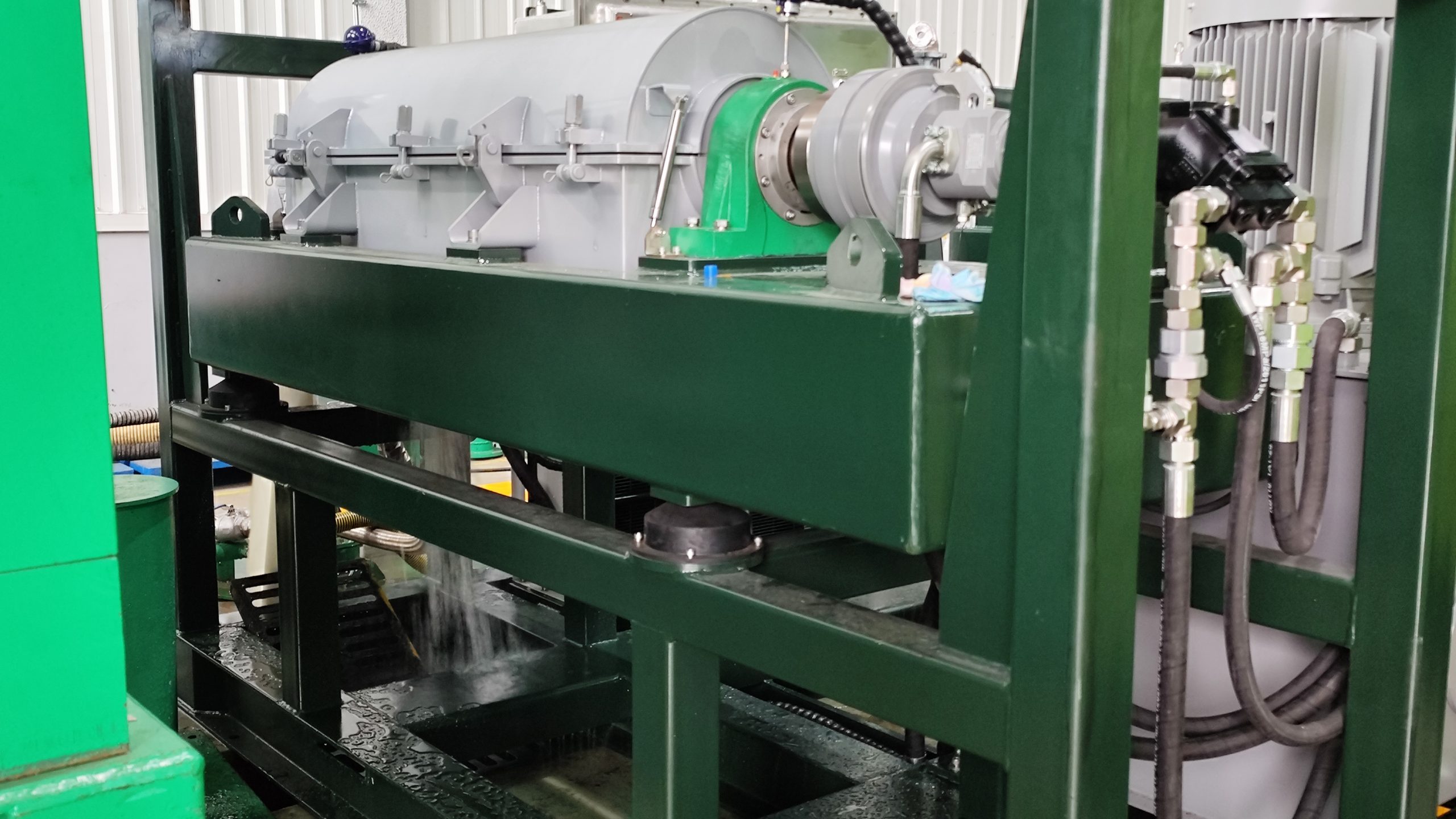
Fig.1 Decanter Centrifuge
The trend in centrifuge technology is moving towards greater automation and control. Modern decanter centrifuges increasingly integrate PLC (Programmable Logic Controller) systems, enabling precise control over rotational speed, feed rate, and cake dryness. PLCs not only optimize separation efficiency but also enhance safety by allowing real-time monitoring and automated fault response, reducing human intervention and operational risk.
In oil and gas applications, safety is paramount. Explosion-proof (Ex) designs for motors, electrical cabinets, and control panels ensure that centrifuges can operate safely in potentially hazardous environments. The combination of robust mechanical design, PLC automation, and explosion-proof technology makes centrifuges a reliable choice for demanding industrial settings, including offshore drilling, refinery wastewater treatment, and drilling mud processing.
At GN Separation, we have delivered solutions worldwide—from pharmaceutical wastewater treatment plants in Europe to power generation facilities in Asia—demonstrating the versatility of decanter centrifuges. As industries demand higher efficiency, safer operation, and remote monitoring, the adoption of PLC-controlled, explosion-proof centrifuges continues to grow, solidifying their role as essential equipment in modern process engineering.
GNLW364-VFD Dewatering Centrifuge for Overseas Pharmaceutical Plant Wastewater Treatment
In the pharmaceutical manufacturing industry, wastewater treatment is one of the most critical yet challenging processes. Pharmaceutical effluents often contain high levels of suspended solids, organic matter, and other complex compounds that must be efficiently separated before discharge or reuse. The GNLW364-VFD dewatering centrifuge is designed to address these challenges, providing a reliable and energy-efficient solution for solid-liquid separation in pharmaceutical wastewater treatment systems.
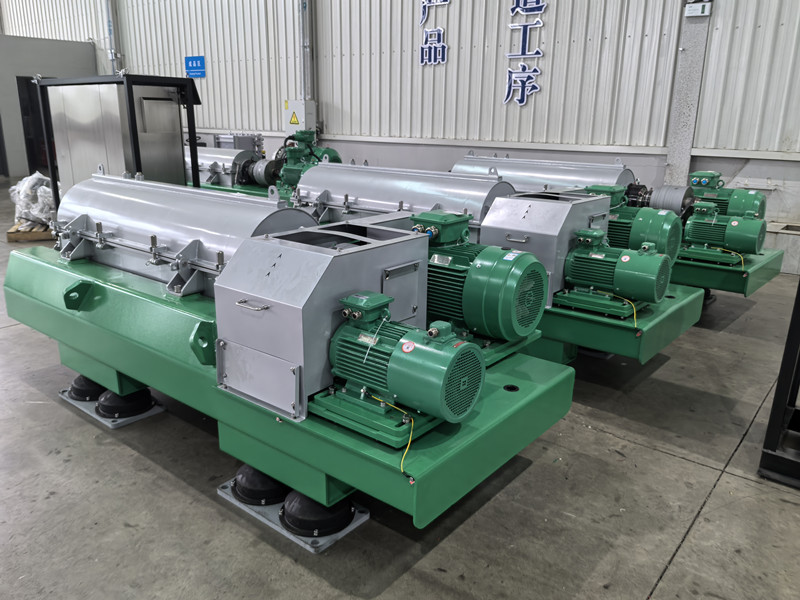
1. Meeting the High Standards of the Pharmaceutical Industry
Pharmaceutical production demands strict compliance with environmental and regulatory standards. The GNLW364-VFD centrifuge ensures effective dewatering of sludge while maintaining process cleanliness and safety. Constructed with stainless steel 316L contact parts, the unit offers superior corrosion resistance against chemical agents commonly present in pharmaceutical waste streams. Its fully enclosed design minimizes odor emission and contamination, creating a clean and hygienic working environment.
2. Optimized Performance with Variable Frequency Drive (VFD)
Equipped with a VFD control system, the GNLW364 allows operators to precisely adjust the bowl and scroll speeds to suit different feed conditions. This flexibility enables optimal separation efficiency even when the feed composition fluctuates. The system’s intelligent control panel provides real-time monitoring of parameters such as torque, flow rate, and vibration, ensuring stable operation and preventing overload. This adaptability makes it suitable for both primary sludge thickening and final dewatering stages in wastewater treatment lines.
3. Sustainable and Cost-Effective Operation
The dewatering centrifuge significantly reduces the moisture content of sludge, lowering transportation and disposal costs. By improving the dryness of the discharged solids, it minimizes waste volume and supports sustainable resource management. Additionally, the GNLW364-VFD’s energy-efficient drive system helps pharmaceutical plants reduce power consumption and carbon footprint, aligning with global trends toward greener production.
In summary, the GNLW364-VFD dewatering centrifuge is a proven and trusted solution for pharmaceutical wastewater treatment. With its high efficiency, flexibility, and compliance with industry standards, it plays an essential role in helping pharmaceutical facilities achieve cleaner, safer, and more sustainable wastewater management.
What are the frequently asked questions about decanter centrifuge?
Decanter centrifuge is a kind of centrifuge. It is a kind of mud-water mixture that enters the drum through the feed pipe and the screw discharge port. Under the action of the centrifugal force generated by the high-speed rotation of the main engine, the solid particles with larger specific gravity are deposited on the inner wall of the drum, and the spiral blades moving relative to the drum successively scrape the solid particles deposited on the inner wall of the drum and push them out. The slag outlet, the separated clear liquid flows out of the drum machine through the opening of the weir plate.
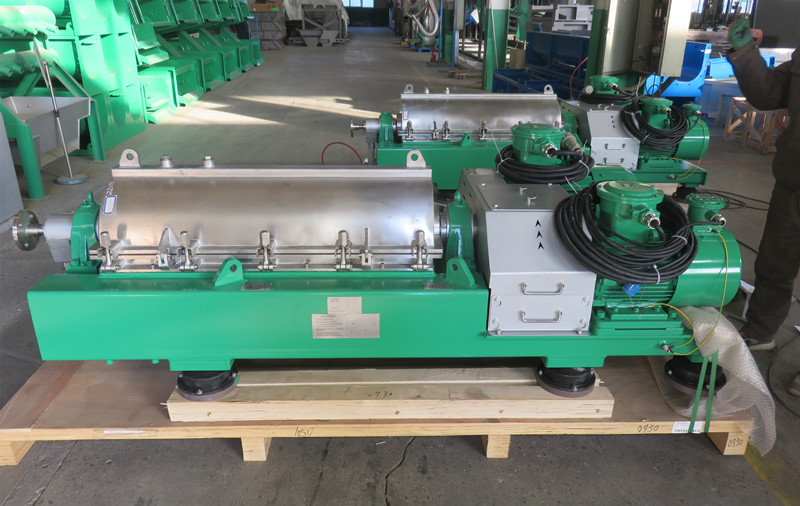
1. What are the main components of the screw conveyor in the decanter centrifuge?
The screw conveyor of the Decanter centrifuge contains two parts: the drum and the screw, and the screw includes the cylinder and the pusher blade. On the cylinder, there is a feed end and a clear liquid outlet end, which are used to feed materials and flow out the clear liquid after separation.
2. Why can the Decanter centrifuge be used in petrochemical and waste treatment?
Because the decanter centrfuge has the characteristics of compact structure, low energy consumption, strong production capacity, and good adaptability to materials. And with the continuous development of science and technology, the centrifuge has been greatly improved and advanced in terms of structure, performance and technical parameters, and its separation effect has also been improved, so it is used in petrochemical and The treatment of the three wastes is very suitable.
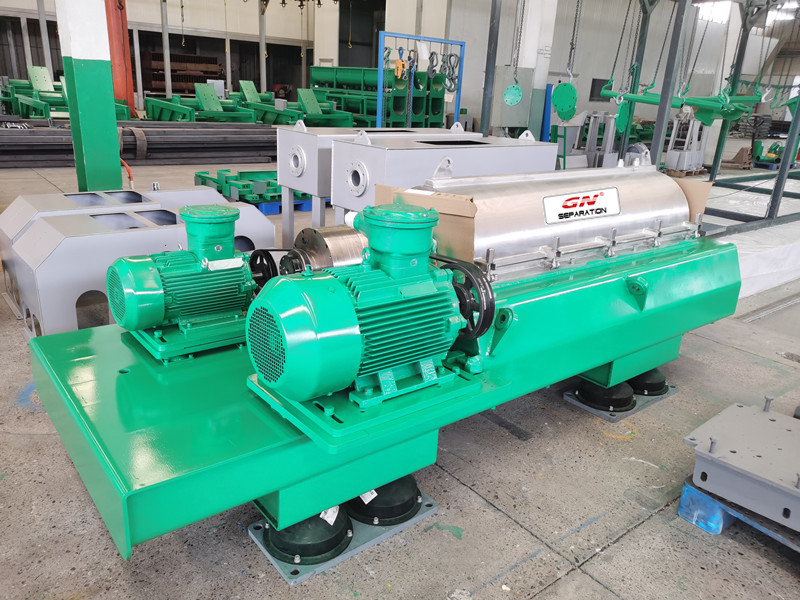
3. Can the decanter centrifuge be used as the main engine of sludge dewatering?
If it is used for sludge dewatering, it is very suitable, and if it has a large aspect ratio and a fully enclosed operation is selected, then it can have a good use effect, because its It has advantages that other sludge dewatering equipment does not have.
4. What is the process of desilting using a decanter centrifuge in a sewage treatment plant?
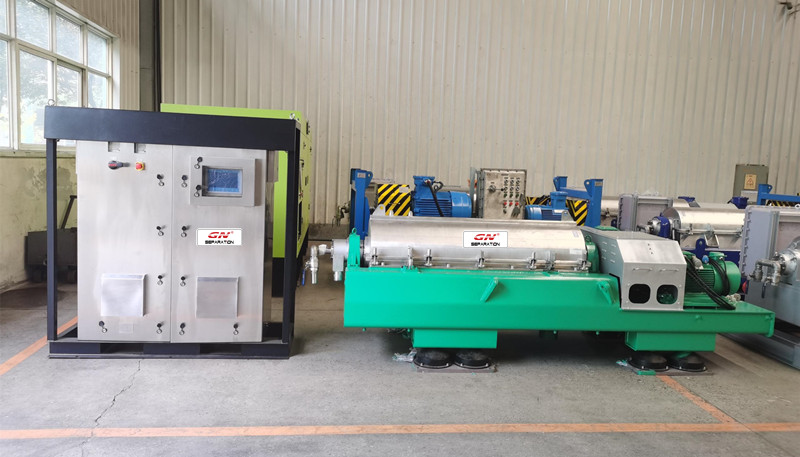
In the wastewater treatment plant, in the treatment of activated sludge, the whole process of using a decanter centrifuge to desludge is to drive the high-speed rotation of the sludge through a high-speed rotating drum, and then generate centrifugal force to make the sludge The sedimentation of the solid particles accelerates and concentrates on the wall of the drum. Then, through the spiral, the formed mud cake is scraped to the small end of the rotating drum, so that it can be discharged, thereby completing the desliming work.
5. What is the main use of the decanter centrifuge? In addition, what are the unloading conditions of the decanter centrifuge?
Decanter centrifuge is mainly used to remove impurities and suspended solids in the liquid to achieve the role of purification. The general decanter centrifuge, its discharge conditions, mainly including cone angle and bowl speed.