Author Archives: GN Decanter Centrifuge

Decanter Centrifuge

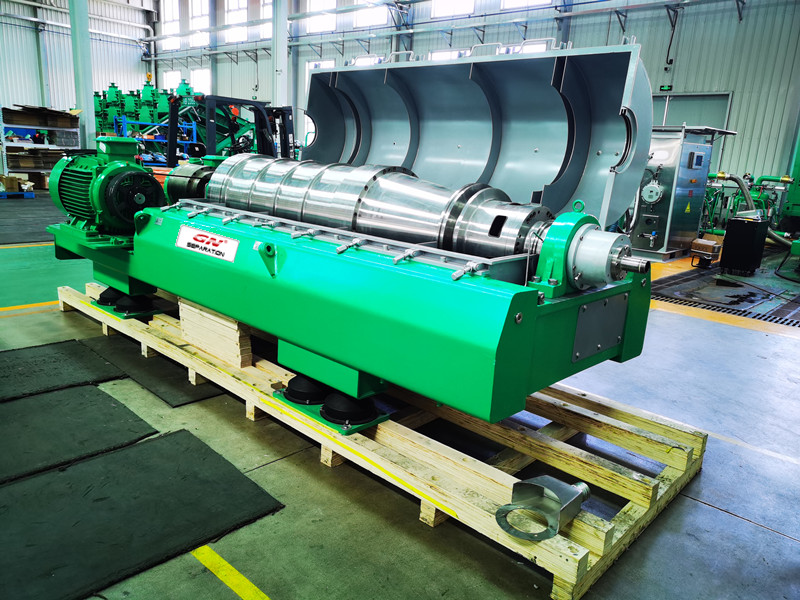
A decanter centrifuge, also known simply as a decanter, is a specialized type of centrifuge used in various industrial processes for separating solids from liquids. It is particularly effective in applications where the solids and liquids have a significant difference in density. The decanter centrifuge operates on the principle of sedimentation, where centrifugal force is used to accelerate the settling of particles. At GN we have may different sizes of decanter centrifuges. These machines have been operating according to the same basic principle since the 19th Century. Gn produces from 9inch to 30inch bowl. The main function of our centrifuges is dewatering sludge, and mud. Thickening sludge, clarifying different type of liquids, separating 3-phase mixtures, classifying solids in a wet suspension by grain size, and separation of solids according to various densities. The main industries of application of GN centrifuges is Oil and Gas drilling mud solids control, Drilling waste management, oil sludge treatment, HDD trenchless mud cleaning, Bored pile and TBM mud dewatering. Also in waste water treatment, chemical and pharmaceutical separation, mining and food and beverage industry. Our centrifuges are either fixed speed or controlled by VFD. A VFD system can change the bowl speed, differential speed, and pump capacity. It has a touch screen for user-friendly operation and smart control with protection. We also have a fully Hydraulic Drive Centrifuge, which is compact in design and makes it easier for rig set up. The centrifuge works in a way with feed inlet, The mud or slurry is added into the centrifuge through it. As the mixture enters the bowl, it experiences high rotational speeds. The centrifugal force generated by the rotation causes the denser solids to move outward toward the bowl wall, while the lighter liquid phase moves toward the center. The separation process occurs due to the density difference between the solids and the liquid. The centrifugal force acting on the particles causes them to settle at the bowl wall, forming a solid cake. Meanwhile, the clarified liquid, known as the centrate or effluent, collects in the center. To continuously discharge the separated solids, a scroll conveyor or auger inside the bowl rotates at a slightly different speed than the bowl itself. This differential speed helps convey the solids toward the discharge end of the centrifuge. Decanter centrifuges offer continuous and automated separation, making them efficient and suitable for large-scale industrial processes. They are a crucial tool in industries where separation and clarification of liquids and solids are vital for product quality, environmental compliance, or resource recovery.


Large Vibrating Screen

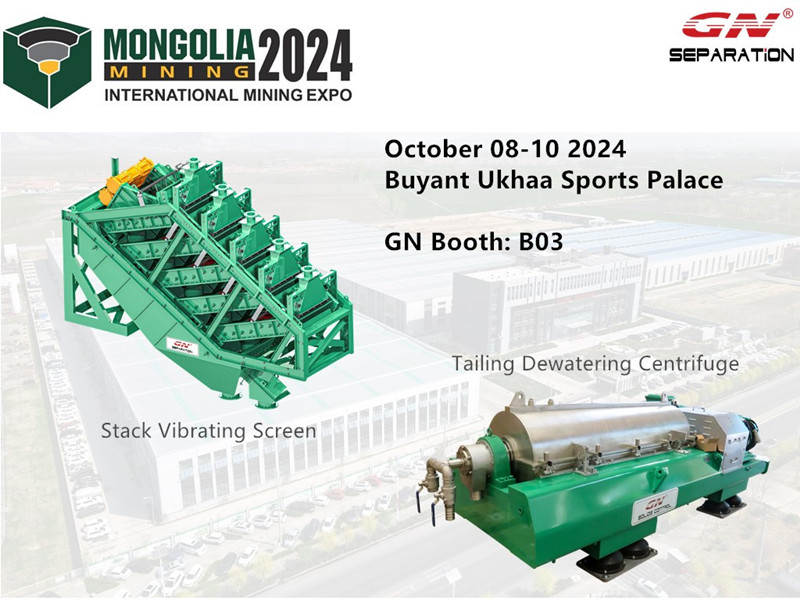
GN has developed a large linear vibrating screen for our iron ore clients. It is a large vibrating screen is a mechanical tool used to separate solid particles of different sizes by utilizing the principle of vibration. These screens are commonly used in industries such as mining, metallurgy, coal, construction, and chemical processing. The primary purpose of a large vibrating screen is to separate materials into various sizes for further processing or to remove impurities. Large vibrating screens use a vibration mechanism to induce motion in the screen deck. This mechanism is often an eccentric shaft with counterweights or unbalanced motors. The vibration helps to convey the material along the screen and aids in the separation process. Large vibrating screens may have multiple screen decks stacked on top of each other. This allows for the separation of material into different fractions in a single pass. The screen surface is the area where the material separation takes place. It is typically made of durable materials such as steel or polyurethane. The screen surface may have different opening sizes or patterns to allow for the classification of materials based on size. The drive unit is responsible for generating the vibratory motion. It can be an electric motor or a hydraulic drive system, depending on the design and application. A robust support structure is essential to provide stability and support for the vibrating screen. This structure must be able to withstand the dynamic forces generated during operation. The angle of the screen deck is adjustable and influences the material’s movement on the screen. The angle is typically set to optimize the screening process for specific applications. Material is fed onto the vibrating screen at one end, and the separated fractions are discharged at the other end. The design of the feed and discharge ports can impact the efficiency of the screening process. The screening media is the material used on the screen surface to facilitate the separation process. Common types include woven wire mesh, polyurethane panels, or perforated plates. Large vibrating screens are used in various industries for applications such as scalping, dewatering, classifying, and sizing bulk materials. The specific design and features of a vibrating screen depend on the material characteristics, required throughput, and the operational conditions of the process. GN we have three different types of screens. Large linear vibrating screen, large banana vibrating screen, and large flip-flow vibrating screen. Our large screens assist mining companies with their projects and success.

Tubular centrifuge

A tubular centrifuge is a type of centrifuge that separates liquids from solids or separates liquids of different densities using centrifugal force. It consists of a series of tubular bowls or chambers arranged in a circular or parallel configuration. These tubular bowls rotate at high speeds, generating centrifugal force that causes the separation of components based on their densities. Tubular Centrifuges is artificial slag removal equipment, and the processing capacity is limited, so it is generally used for working conditions with low solid content and relatively small processing capacity. The main separation occurs within the tubular bowls, which are long, narrow cylinders with a series of concentric tubes. The rotating motion of the bowls creates high centrifugal forces that drive the separation of different components. According to the function, high speed tubular centrifuge has two types: clarification type and separation type. The clarification type Tubular Centrifuge is mainly used for separation of liquid and solid, and the separation type Tubular Centrifuge is mainly used for separation of liquid (light phase), liquid (heavy phase), and small amount of solid.

GNGQ — Clarification Type Tubular Centrifuge

The centrifuge rotates at a high speed to reach a suitable working speed (the speed can be adjusted by the electric control panel), and the feeding inlet is continuously fed from the bottom, and a certain feeding pressure (greater than 0.05Mpa) is required. The specific gravity of liquid phase in the feeding inlet is lighter and it gradually spirals upward from bottom to top to continuously discharge from the clear liquid outlet at the upper part of the rotor. The specific gravity of solid phase is relatively heavier, and it settles inside the rotor. After the solid is collected and full in the drum, the machine stops, and the rotor is manually removed for slag cleaning.

GNGF — Separation Type Tubular Centrifuge

The centrifuge rotates at a high speed to reach a suitable working speed (the speed can be adjusted by the electric control panel), and the feeding inlet is continuously fed from the bottom, and a certain feeding pressure (greater than 0.05Mpa) is required. There is difference in specific gravity of the two liquid phases in the feeding inlet, and they are incompatible with each other. The two liquid phases gradually spiral upward from bottom to top until the upper part of the rotor. The liquid phase with lighter specific gravity is discharged from the light liquid outlet, and the liquid phase with heavier specific gravity is discharged from the heavy liquid outlet. The specific gravity of solid phase is the heaviest, and it settles inside the drum. After the solid is collected and full in the drum, the machine stops, and the rotor is manually removed for slag cleaning.

Separators: High Speed Tubular Centrifuge - GN Separation Equipment Manufacturer High G Force Tubular Centrifuge Shipped to Europe Client - GN Separation Equipment Manufacturer

Shale Shaker

A shale shaker is a crucial component in the process of drilling for oil and gas. It is a vibrating screen or sieve that helps separate cuttings (solid particles) from the drilling fluid (mud) during the drilling process. The primary purpose of the shale shaker is to remove large solids, typically larger than 75 microns, from the drilling fluid. Shale shaker is first phase solids control equipment in drilling fluids processing system, also known as key solids control equipment in drilling mud system, shale shaker decides performance of the whole solids control system. GN Solids Control can design double shakers and triplicate shakers on single skid according to clients’ special requirements and also supply relevant connecting manifold, according to current industry situation, GN provide both third generation linear motion shale shaker and fourth generation balanced elliptical shale shaker. Here’s how a shale shaker works, as drilling progresses, the drill bit generates cuttings that mix with the drilling fluid. This mixture is known as drilling mud. The drilling mud, along with the cuttings, flows into the shale shaker. The shale shaker consists of a vibrating screen or mesh that allows the drilling fluid to pass through while retaining the larger cuttings. The shale shaker vibrates rapidly, causing the drilling fluid to pass through the screen. The vibrating motion helps to separate the cuttings from the drilling fluid. The size of the openings in the screen determines the size of the particles that can pass through. The larger cuttings are retained on the screen and are subsequently removed from the drilling fluid. These cuttings are then are typically collected and disposed of. The drilling fluid, now free from larger cuttings, continues its journey in the drilling process. It may go through additional processes or equipment to further clean and condition the fluid before being reused in the drilling operation. Shale shakers play a crucial role in maintaining the integrity of the drilling fluid, ensuring that it remains effective in carrying cuttings to the surface and providing stability to the wellbore. This process is essential for drilling operations in the oil and gas industry, as it helps prevent equipment damage, maintains drilling efficiency, and aids in environmental protection by managing the disposal of cuttings. GNZS linear motion shale shaker absorbed advanced tech at home and abroad ,and integrated GN own design. GN complete series shale shaker can meet customers’ variable demand. Clients feedback proved the advantages of this kind of shale shaker: high G-force, wide screen area, compressed structure, cost-effective, etc.


shale shaker 1


Desander

A desander is a piece of equipment used in the oil and gas industry to remove sand and other solid particles from drilling mud. Drilling mud, also known as drilling fluid, is a crucial component in drilling operations as it helps to cool and lubricate the drill bit, carry cuttings to the surface, and provide support to the wellbore walls. At GN we have two different types of applications for our desander. First application is  for oil gas drilling, CBM drilling mud solids control. Second is desander system with mud tank is for construction operation for no dig, bored pile drilling desander for bentonite recycling. The desander is part of a larger system of equipment designed to clean and maintain the drilling mud. GN desander is the second class and the third class solid control equipment to treat the drilling fluid. According to the size of the cone diameter, it is divided into Desander and desilter. Usually the cone diameter is more than 6″is called desander, and used as the second-control equipment in drilling operation. We commonly used 8 “and 10” cones desander to separate solid-phase particle size 47-76μm in the drilling fluids. Drilling mud containing solids and sand is fed into the desander through an inlet. The heart of the desander is a set of hydrocyclones, which are essentially conical-shaped vessels. These hydrocyclones create a swirling flow pattern, causing the heavier solids (including sand) to move towards the outer wall. As the drilling mud moves through the hydrocyclone, centrifugal force causes the heavier particles to settle at the bottom and be directed out of the desander, leaving the cleaner mud to continue its journey. The separated solids, which settle at the bottom of the hydrocyclone, form the underflow and are typically removed for further processing or disposal. The cleaner mud, referred to as the overflow, exits the hydrocyclone and is directed back into the drilling mud system. Desanders are effective in removing coarse particles from the drilling mud, preventing excessive wear on drilling equipment and maintaining the integrity of the wellbore. In some cases, desanders are used in conjunction with desilters, which are designed to remove smaller particles.It’s worth noting that the design and capacity of desanders can vary depending on the specific drilling operation, the type of drilling mud being used, and the characteristics of the solids in the mud. Efficient solids control is essential for successful and safe drilling operations in the oil and gas industry. Our desanders work with multiple equipments and are versatile to work in different types of operations.

Mud Agitator

A mud agitator is a device used in drilling mud systems to keep the drilling mud homogeneous and prevent settling of solids. It is an essential component in the oil and gas drilling industry and other applications where drilling mud is employed. The primary purpose of a mud agitator is to ensure that the drilling mud remains well mixed and maintains a consistent density throughout the mud system. At GN Solids our JBQ series mud Agitator has less than 5.5 kW drilling mud Agitator adopts the blender cycloid speed reducer and it is applied to the liquids mixing tank. This mud agitator  has the advantage of compact structure, so it occupies small footprint. More than 7.5 kW mud agitator uses the turbo and worm gear speed reducer, with the large torque transmission. The  revolution is steady and it works reliably and has great merit. Mud agitators are designed to agitate the drilling mud by creating turbulence and mixing the various components, including water, drilling fluid additives, and cuttings. This prevents the settling of solids and helps maintain the desired properties of the drilling mud. Components: A typical mud agitator consists of a motor, a gearbox, and an impeller. The motor provides the power, the gearbox helps control the speed of the impeller, and the impeller is the rotating device that creates the agitation in the mud. Mud agitators are usually installed in mud tanks. They are positioned to provide optimal mixing throughout the tank, preventing the accumulation of solids in any one area. Proper installation is crucial for efficient mud agitation. There are various types of mud agitators, including vertical agitators and horizontal agitators. The choice of agitator type depends on factors such as the size and configuration of the mud tanks. Maintaining a consistent mud density is crucial for the success of drilling operations. Inconsistent mud density can lead to issues such as wellbore instability, poor drilling performance, and increased wear and tear on drilling equipment. Regular maintenance is important to ensure the proper functioning of mud agitators. This includes checking for wear and tear, lubricating moving parts, and addressing any issues with the motor or gearbox. Mud agitators play a vital role in the drilling process, contributing to the efficiency and effectiveness of the drilling mud system. They help ensure that the drilling mud maintains the required properties for successful drilling operations. At GN, our mud agitators are used in operations at India, Russia, Middle East and through out the world. We have a product with great reliability and ensures our customers to successful outcome and longevity.


GN Solids Control System

GN Solids Control System is manufactured for all solids control equipment and is designed and manufactured to compose whole mud systems to meet demands of drilling rigs from 250hp to 3000hp. GN as a solds control manufacutrer owns USA API and ISO certifications. GN is also certified by Europe CE for exporting to developed countries. We even have a complete system operating near Russia ar 40 degree below Zero.
A solids control system is an essential component in the drilling industry, particularly in the oil and gas sector. Its primary purpose is to remove drilled solids, such as cuttings and other debris, from the drilling fluid, mud or slurry. This ensures that the drilling fluid maintains its desired properties, which is crucial for the efficient and safe drilling of wells. A complete solids control system typically consists of several key components.  Shale shakers are the primary devices used to remove large solids from the drilling fluid. They use vibrating screens to separate cuttings and other debris, allowing the cleaner drilling fluid to be returned to the mud circulation system. Desanders and desilters are hydrocyclone devices designed to remove finer particles from the drilling fluid. Desanders typically target larger particles, while desilters focus on smaller particles. These components help enhance the overall efficiency of the solids control system. Centrifuges are used to separate very fine particles and colloidal solids from the drilling fluid. They operate by rapidly spinning the mud, causing the solids to settle and be discharged, leaving behind cleaner drilling fluid. Mud cleaners combine the functions of shale shakers, desanders, and desilters into one unit. They use a combination of vibrating screens and hydrocyclones to remove a wide range of particle sizes from the drilling fluid. Mud tanks are large containers used to store and circulate the drilling fluid. They play a crucial role in maintaining the consistency and properties of the mud throughout the drilling process.These devices are used to keep the drilling fluid in a homogeneous state by preventing the settling of solids. Agitators and mixers ensure that the mud remains well-mixed and consistent, promoting effective solids removal. Cuttings dryers are used to further reduce the moisture content in the drilled cuttings, making them easier to handle and often facilitating environmentally friendly disposal. A well-designed solids control system is crucial for drilling operations as it improves drilling efficiency, protects drilling equipment, and minimizes environmental impact. The specific configuration and components of a solids control system can vary based on the drilling conditions, the type of drilling fluid used, and the requirements of the drilling operation.

Shale Shaker

A shale shaker is a critical piece of equipment used in the oil and gas industry, as well as in other industries such as mining and civil engineering. Its primary function is to separate solids, typically drill cuttings or other debris, from drilling fluids or drilling mud. This separation process is crucial for various reasons, including environmental compliance, efficient drilling operations, and the preservation of valuable drilling fluids. The drilling mud and cuttings mixture enters the shale shaker, which consists of a vibrating screen or series of screens. These screens are typically made of wire mesh or perforated metal plates. As the mixture is pumped over the vibrating screens, the solid particles (cuttings) are larger and unable to pass through the screen’s openings, while the drilling mud and smaller particles can pass through the screens. The vibrating motion of the screens helps to separate the cuttings from the drilling mud. The cuttings are then collected and removed from the system for disposal. The clean drilling mud is returned to the mud tank for reuse in the drilling process, reducing the need for new mud and saving costs. Our shakers are equiped with Italy OLI or US Martin Brand Vibration Motors and our control panel is from Siemens or Schneider components. Replacing the screens is really easy, that is what separates our shakers from the others. No hammering or additional speciality tools are required. The mechanical deck angle can be adjusted from -1 – + 5 degree angle. Which allows to work reliable for different drilling fluids. Our GN shaker is very user friendly and has a locking system made from stainless steel for tranportation of the machine. Also the viberating springs are covered with rubber for safety and less noise. Our shaker also has a heavy duty design and heat treatment for the shaker basket to get the adjustable G force up to 8.0G, which allow for the heavy duty drying for minning and waste management. Our shakers are one of the best shakers on the market for the price we offer, it as good or even better than a shaker three times much of its cost. Whick explains why our product is the best shaker for its money and the quality. shale shaker 1

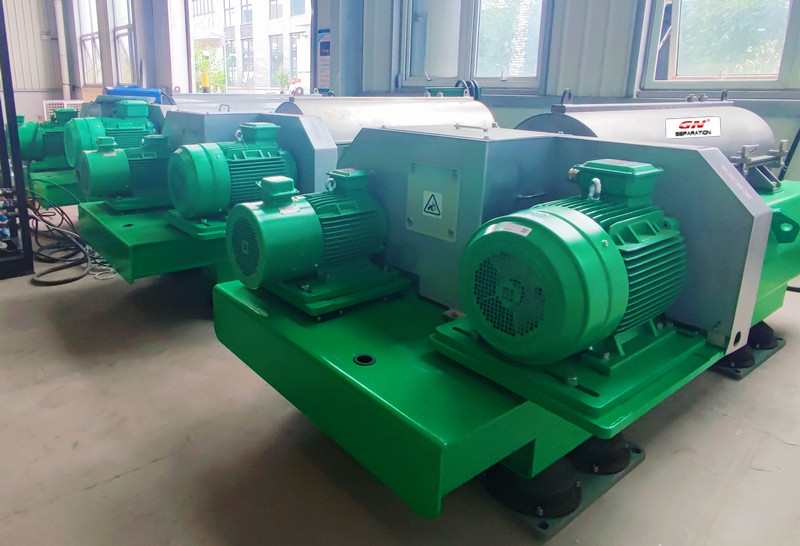
10 Sets Fully Hydraulic Drive Centrifuge for Drilling Mud to North Africa

The concept of Decanter Centrifuge has been in use since the 19th century. It uses a horizontal bowl with a screw inside to rotate and separate the liquids from the solids. It is a really easy and effective way to separate your product. By using the forces such as gravity and centrical force, to assist separate the slurry or solids and liquids. I was introduced to Decanter Centrifuge after learning the concepts of separation. It is a lot to pick up, due to the use of a lot of components and different angels. Our company GN Solids has a factory that specializes in the mass production of Decanter Centrifuges. We can accommodate large production of these machines, as we received an order of 10 sets of fully hydraulic drive centrifuges to be delivered to North Africa. In order to produce this type of heavy and high rpm machines, your factory must be equip with the best of technology and development process. In order to make a centrifuge, it has to go through various tests, such as balancing. It uses a stage 3 balancing process to maximize the balance of centrifuge with 1800 rpm, and low speed balancing. With real operation high speed balancing as well as assembly balancing. So it can be ready without any doubts and provide the best service for the customer and make a great impact. Now with the order of fully hydraulic drive centrifuge, we came together with Viscotherm and ROTODIFF from Switzerland to make the best product in the market. With meeting the highest standards, and working together with the best companies, we developed a product that is compact and is being adapted by operations around the world and is in high demand. It is also VFD, which means it can be controlled by arranging the input of the electricity and work accordingly to the product desired. This machine consists of hydraulic motor and a hydraulic pump in order to work. It is a less complex designed and that is why a lot of companies are switching over to the use of this type of Decanter Centrifuge. Now with the successful order that is being shipped to North Africa, as it provides service to the companies and builds a better image for GN Solids.