The separation capacity of a decanter centrifuge mainly depends on the density difference between the solid and liquid phases and the length of the sedimentation zone. When the density difference between the solid and liquid phases is small or the slurry viscosity is high, the separation and settling process becomes more difficult.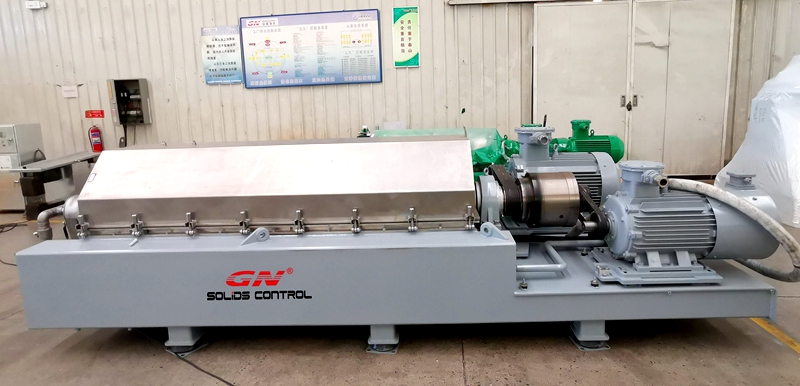
In practical operation, three main factors significantly influence the separation performance of a decanter centrifuge: feed temperature, feed rate, and abnormal process conditions.
1. Feed Temperature
The temperature of the slurry directly affects the viscosity of the liquid phase. Generally, as the temperature increases, the viscosity of the liquid decreases. Lower viscosity allows the liquid film surrounding the solid particles to become thinner, making it easier for fine particles to settle under centrifugal force. In addition, higher temperatures reduce the amount of liquid trapped within the pores of the solids, which can improve the dewatering performance of decanter centrifuge.
2. Feed Rate
An excessive feed rate may lead to poor separation performance because the residence time of particles inside the centrifuge bowl becomes insufficient. For effective separation, the time required for solid particles to settle onto the bowl wall must be shorter than the residence time of the particles inside the bowl.
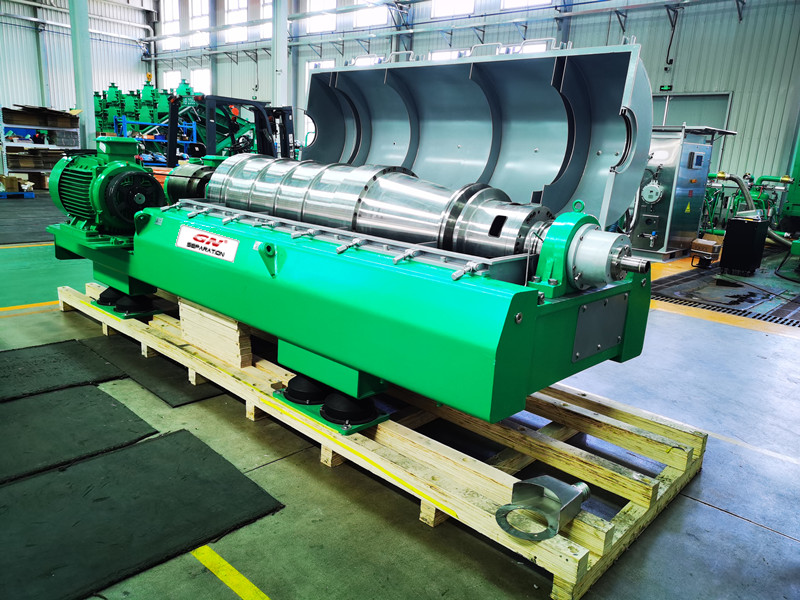
Therefore, the slurry must remain in the centrifuge long enough to allow solid particles to settle completely. In practical applications, reducing the feed rate often improves the separation result. For example, with the same material, a feed rate of 1 m³/h may lead to unsatisfactory separation, while reducing the feed rate to 0.5 m³/h can significantly improve the separation performance.
3. Abnormal Process Conditions
Abnormal process conditions mainly refer to situations where the crystal content in the feed slurry is insufficient, or where crystals have not properly formed and instead appear as flocculated or irregular particles. Under such conditions, the solids are more difficult to separate, making it challenging for the decanter centrifuge to achieve optimal separation efficiency.