A three-phase decanter centrifuge is a specialized type of decanter centrifuge designed to separate a mixture into two liquid phases and one solid phase simultaneously. Its operating principle is based on the difference in specific gravity between the solid and liquid phases. When the mixture enters the rotating bowl, the powerful centrifugal force—thousands of times stronger than gravity—forces the solids to settle against the bowl wall, while the two liquid phases stratify into distinct layers. A specially designed mechanism then continuously discharges the separated solids and liquids, completing a fully enclosed and automatic separation process.
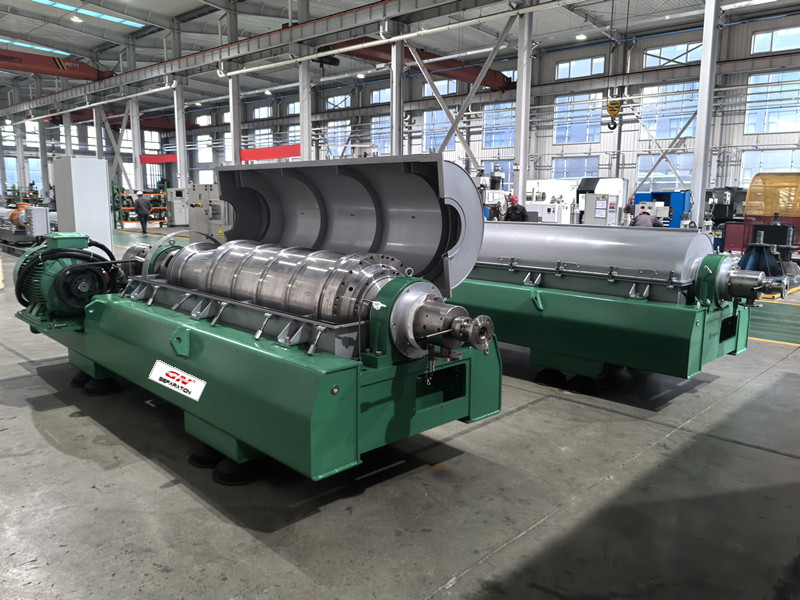
Three-phase decanter centrifuges are widely used for clarification and removal of solids and impurities in various applications, including tar treatment, pesticide processing, oilfield recovered oil and aged oil, waste engine oil recycling, and the recovery of fats from food-processing or catering waste.
With the continuous advancement of centrifuge designs and separation technology, three-phase decanter centrifuges have become increasingly common in many industrial production fields. They offer high solid-liquid separation efficiency, helping to improve process stability and product quality.
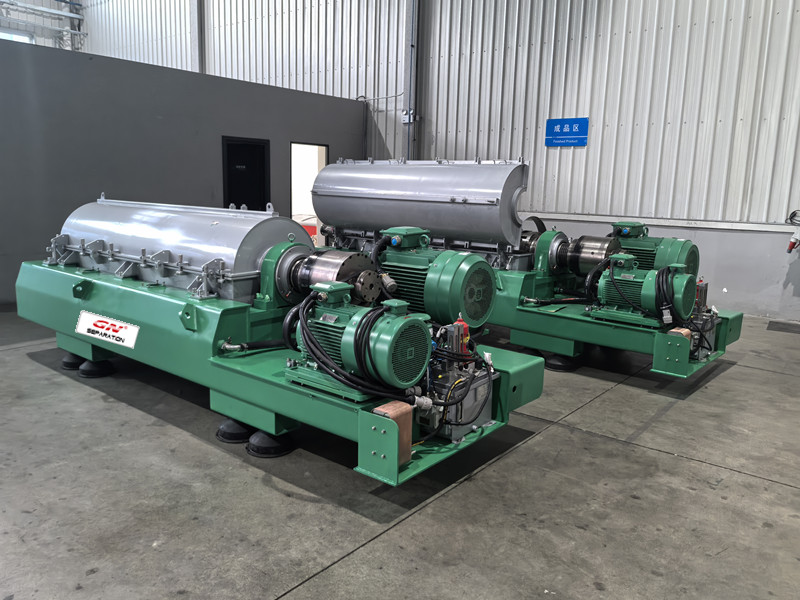
Key advantages of three-phase decanter centrifuges include:
Large Processing Capacity & Cost Efficiency – Capable of handling high throughputs while remaining economical to operate.
- Ease of Maintenance– The design allows for convenient inspection and repair, reducing downtime.
- Compact & Safe Design– A well-engineered, compact structure ensures stable, safe, and continuous operation.
High-Quality Components – Premium-brand bearings and precision manufacturing improve reliability and service life.
User-Friendly Operation – Automated controls and an external interface simplify setup and monitoring.
In summary, three-phase decanter centrifuges combine robust mechanical performance, high separation efficiency, and automation to deliver stable, reliable, and cost-effective solutions. Their design reflects the growing demand for advanced solid-liquid-liquid separation technology across multiple industries.