Dewatering centrifuge is a crucial piece of equipment used in many industries to separate solid particles from liquids by applying centrifugal force. The process, commonly referred to as centrifugal dewatering, is especially useful in industries such as wastewater treatment, mining, food production, and even pharmaceuticals.
How Does a Dewatering Centrifuge Work?
At its core, a dewatering centrifuge operates by spinning a slurry (a mixture of solids and liquids) at high speeds. This spinning action generates centrifugal force, which pushes the heavier solid particles outward, while the lighter liquid is forced toward the center. This separation process allows for the efficient removal of water or other liquids, leaving behind solid material that can then be disposed of or further processed.
Applications in Wastewater Treatment
One of the primary applications of dewatering centrifuges is in wastewater treatment plants. Municipalities and industries alike rely on these machines to remove excess water from sludge, reducing its volume and making it easier and more cost-effective to dispose of or recycle. By reducing the moisture content of sludge, centrifuges help in reducing transportation costs, minimizing landfill space, and even recovering valuable resources.
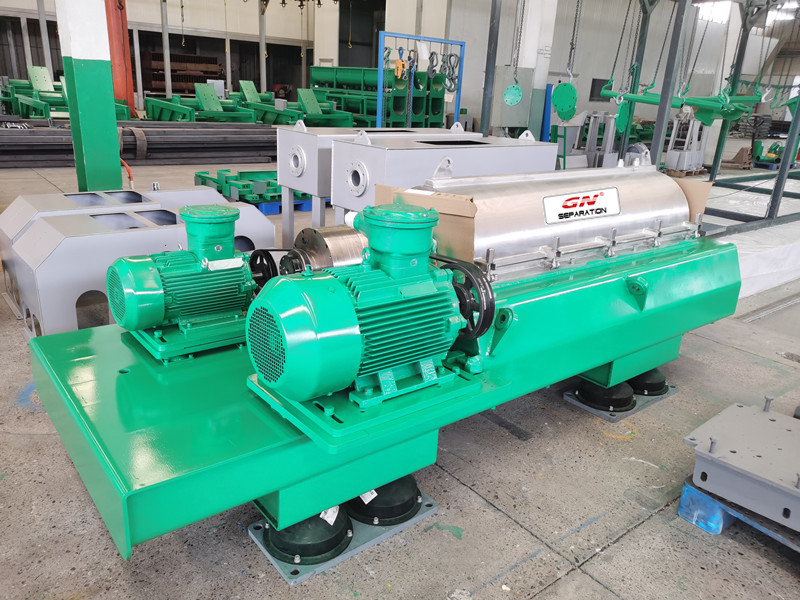
GN dewatering decanter centrifuge is T series decanter centrifuge with beach angle of 8.5 Degrees. GN T series decanter centrifuge is usually used dewatering and thickening purpose. It is widely used for maximum dewatering requirements of municipal and industrial wastewater sludge.
Mining Industry Benefits
In the mining industry, dewatering centrifuges are essential for extracting valuable minerals from slurry produced during extraction processes. The centrifuge helps to recover more of the precious material while also minimizing waste. It also plays a significant role in the dewatering of tailings, reducing environmental impact by preventing water contamination.
The Role in Food Production
Food production is another industry that benefits from dewatering centrifuges. In processes like juice production or the extraction of oils from seeds, a centrifuge helps separate liquids from solids, enhancing the purity of the final product while increasing overall production efficiency.
Pharmaceutical and Chemical Industry Uses
The pharmaceutical and chemical industries also make use of dewatering centrifuges to separate liquids from solid substances during the production of drugs or chemicals. In these sectors, high purity and precision are often essential, and dewatering centrifuges provide an effective solution for removing excess liquids without contaminating the product.
Conclusion
In conclusion, dewatering centrifuges are indispensable in industries that require efficient separation of solids and liquids. GN Sepration is dedicated to solving any difficult separation problems for clients.