GN Separation has unveiled an innovative Hydraulic Drive Decanter Centrifuge system tailored for geological core drilling—designed to operate without electricity, making it ideal for remote and off-grid drilling locations. Continue reading
Monthly Archives: August 2025
Excellent Screening Empowers a Green Future: GN Vibrating Screens in Gasification Slag Treatment
Driving Sustainable Solutions in Coal Chemical Industry
In the era of green energy and sustainable development, efficient solid waste treatment has become a critical challenge for major energy enterprises. Recently, GN Separation successfully delivered and commissioned a complete set of vibrating screens for a large-scale gasification slag treatment project in Inner Mongolia. This milestone project demonstrates GN’s strong technological capabilities and advanced equipment in solid-liquid separation and fine classification, earning recognition from a leading energy group. The solution not only ensures high processing efficiency but also supports environmentally friendly production and resource recycling—key goals for the energy sector in reducing its environmental footprint.
Project Challenges and GN’s Intelligent Approach
Gasification slag, a byproduct of the coal chemical process, presents multiple processing difficulties due to its high moisture content, variable particle size, and abrasive nature. The treatment process involves critical steps such as separation, classification, and dewatering, all of which require highly reliable and efficient screening equipment. Recognizing these challenges, GN’s technical team developed a customized, intelligent screening solution tailored to the project’s unique requirements. This solution emphasizes high operational stability, strong vibration force, and optimized dewatering performance to meet stringent performance targets.
Box-Type Exciter Linear Screen: Core of the Solution
At the heart of this innovative solution is GN’s large linear vibrating screen equipped with a robust box-type exciter. Acting as the vibration source, the box-type exciter delivers powerful and stable motion, ensuring continuous and reliable operation even under demanding conditions. The linear motion trajectory is specifically designed to handle large volumes of gasification slag with varying quality, effectively achieving initial separation and medium removal. This process lays a strong foundation for downstream treatment stages, significantly enhancing overall efficiency and improving the resource recovery rate.
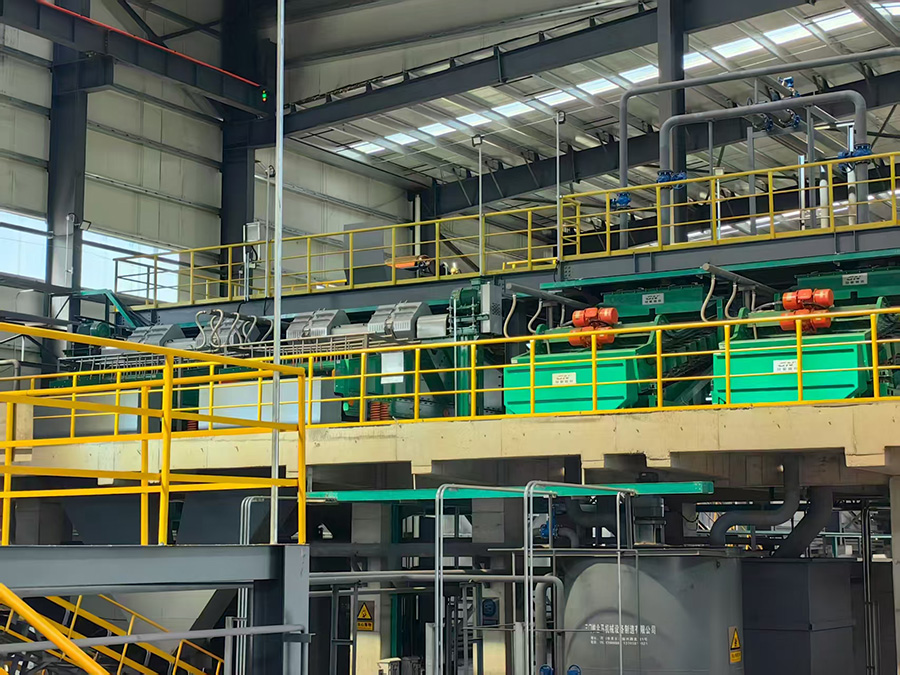
With this successful application, GN once again proves its commitment to delivering high-performance, energy-efficient, and environmentally responsible screening solutions. By combining advanced technology with industry expertise, GN is empowering the coal chemical industry to move toward a greener and more sustainable future.
GN New Workshop for Material Separation Testing
GN Separation is pleased to announce the completion and delivery of its new material separation testing workshop, a dedicated facility designed to support clients with comprehensive equipment trials and process verification. This milestone reflects GN’s ongoing commitment to innovation, practical application, and customer-oriented solutions in the field of separation technology.
IECEx Explosion Proof VFD Decanter Centrifuge for Middle East Client
GN Separation has successfully delivered 3 sets of IECEx-certified Explosion Proof VFD Decanter centrifuges to a valued client in the Middle East, further strengthening its presence in the region’s oil and gas market. The equipment is designed to meet stringent safety standards and operational requirements in hazardous environments, ensuring reliable performance in challenging field conditions. Continue reading
Centrifuges in Wastewater Treatment and Comparison with Leading International Brands
Importance of Centrifuges in Wastewater Treatment
Centrifuges have become indispensable equipment in the wastewater treatment industry, playing a critical role in solid-liquid separation processes. Their ability to efficiently separate sludge from wastewater helps reduce volume, improve water clarity, and facilitate further treatment or disposal. This not only optimizes operational efficiency but also contributes significantly to environmental protection.
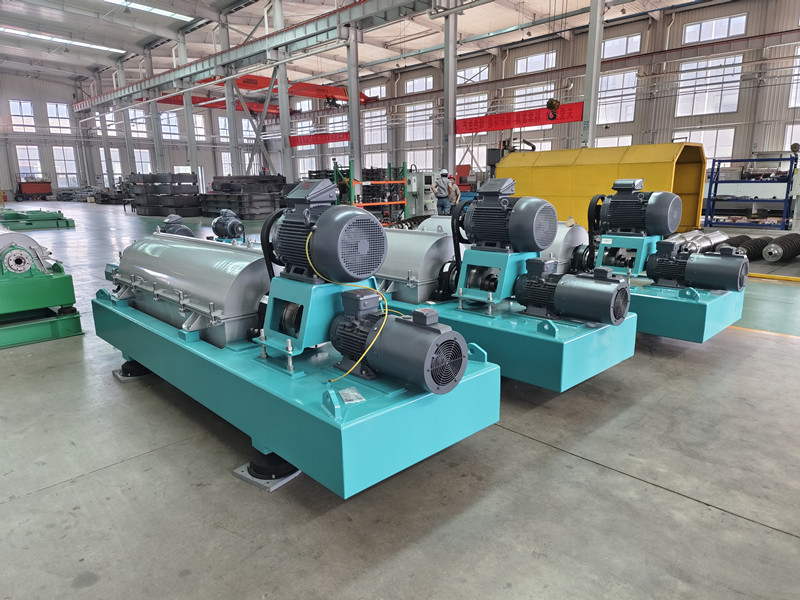
In wastewater treatment plants, centrifuges are primarily used for sludge dewatering. Raw sludge generated from biological or chemical treatment stages contains a high water content, often exceeding 95%. Removing excess water reduces sludge volume, lowers transportation and disposal costs, and improves downstream processing such as incineration or composting. Centrifuges achieve this by spinning the sludge at high speeds, using centrifugal force to separate solids from liquids. The separated solids, or cake, typically reach moisture contents as low as 60-80%, depending on the sludge type and centrifuge model.
Types of Centrifuges and Their Features
Among the various types of centrifuges, decanter centrifuges are the most commonly used in wastewater applications due to their continuous operation and high throughput. They are designed with a rotating bowl and a screw conveyor that continuously separates and discharges solids. Other types like disc-stack centrifuges and tubular bowl centrifuges find specialized applications but are less prevalent in general wastewater treatment.
Comparison of Leading International Brands
When comparing international centrifuge brands, factors such as separation efficiency, reliability, ease of maintenance, energy consumption, and adaptability to varying sludge characteristics are crucial. Leading brands like Alfa Laval, GEA Westfalia, and Flottweg have established reputations for producing high-performance centrifuges tailored for wastewater treatment.
Alfa Laval centrifuges are renowned for their robust design and energy efficiency, incorporating advanced automation and control systems that optimize dewatering processes. GEA Westfalia offers a wide range of decanter centrifuges with innovative features such as self-cleaning bowl technology and modular designs that facilitate maintenance and customization. Flottweg emphasizes reliability and precise separation with their patented designs, including adjustable pond depths and advanced control systems to handle challenging sludge types.
While these international brands offer proven technologies, local manufacturers have also been making significant strides. They often provide competitive pricing and customizable solutions tailored to regional wastewater characteristics and regulatory requirements. Some local centrifuge manufacturers focus on improving after-sales support and rapid service response, which can be advantageous for certain customers.
How to Address Corrosion Issues in Heavy Oil Centrifugal Separation Equipment
During the separation of heavy oil, corrosion of mechanical components of centrifugal separation equipment such as decanter centrifuge is a common and critical issue. This corrosion can be categorized into cold corrosion and hot corrosion, both of which arise under different conditions during operation and shutdown. Continue reading
Specialized Centrifuge Design for Palm Oil Sludge Treatment
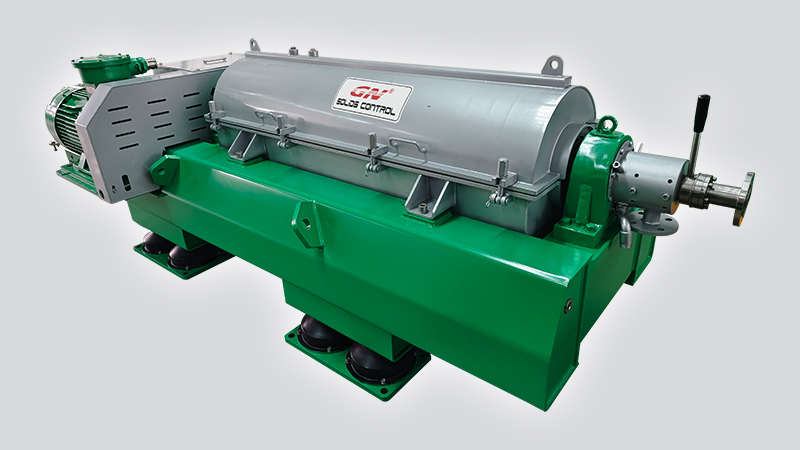
In the industrial separation field, decanter centrifuges are widely used for solid-liquid or three-phase separation across industries such as wastewater treatment, chemical processing, and food production. However, when it comes to palm oil sludge, the material properties and processing objectives differ significantly from conventional sludge or wastewater. These differences require dedicated centrifuge design adaptations to ensure efficient, reliable, and continuous operation under harsh conditions.
1. Material Characteristics: Viscous, High-Solids, and Three-Phase
Palm oil sludge is a mixture of residual oil, water, and solids that are produced during palm oil milling processes. It is highly viscous, contains fibrous solids and sand-like particles, and often includes free oil that must be recovered. This is unlike municipal sludge, which has lower viscosity and typically only requires two-phase separation.
2. Wear Resistance: Key to Long-Term Operation
Due to the presence of abrasive particles like sand and fibers, centrifuges for palm oil sludge must be equipped with enhanced wear-resistant components, such as tungsten carbide tiles on the scroll flights, ceramic or hardened inserts, and protection sleeves in high-impact zones. Without these reinforcements, standard decanters may wear quickly, increasing downtime and maintenance costs.
3. Torque and Differential Speed: Designed for Sticky Materials
The high viscosity of palm oil sludge requires a high-torque gearbox to drive the screw conveyor and handle the heavy solids load. Furthermore, precise control of differential speed is essential to maintain optimal dryness of discharged solids without causing blockages or excessive wear.
4. Three-Phase Separation: Oil, Water, and Solids
Unlike conventional sludge that typically undergoes two-phase separation, palm oil sludge often requires simultaneous separation of oil, water, and solids. This requires a specialized bowl design, optimized weir plates, and precise flow control. The recovered oil can be refined or reused, significantly increasing the overall economic value of the process.
5. Conclusion: Purpose-Built Solutions for a Demanding Industry
Centrifuges used in palm oil sludge treatment are not interchangeable with standard wastewater models. They are engineered with a deep understanding of palm oil processing challenges — from high solids and viscosity to abrasive and corrosive conditions. Manufacturers that provide customized, robust, and easy-to-maintain solutions are essential partners for palm oil mills seeking long-term operational success.