In recent years, with the continuous economic development, new technologies and new processes have appeared endlessly, and the application scale of centrifuges has become more extensive; however, in this industry, most manufacturers are more concerned about the separation function and strength of centrifuges. Requirements, often insufficient attention to the impact of corrosion elements, and then brought some negative effects. Continue reading
Monthly Archives: July 2025
The Role of Decanter Centrifuges in Biofuel Production
As the world seeks sustainable alternatives to fossil fuels, biofuel has emerged as one of the most promising renewable energy sources. Derived from a wide range of organic materials such as used cooking oil, palm oil mill effluent (POME), animal fats, and microalgae, biofuels are praised for their ability to reduce greenhouse gas emissions and promote circular economy models. However, producing high-quality biofuel involves complex separation processes to remove solids, moisture, and impurities. This is where decanter centrifuges come into play as a critical piece of equipment in biofuel processing plants.
Efficient Feedstock Purification
One of the primary applications of decanter centrifuges in the biofuel industry is the purification of raw feedstocks. For example, used cooking oil (UCO), a popular feedstock for biodiesel, often contains food residues, water, and various contaminants. A decanter centrifuge can continuously process large volumes of UCO, separating out solids and water, thus delivering cleaner oil suitable for downstream transesterification into biodiesel. This not only enhances product quality but also helps reduce the load on refining and filtration systems.
Oil Recovery from Palm Oil Sludge and POME
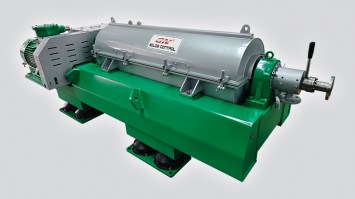
In palm oil-producing regions, large volumes of oily waste such as palm oil sludge and POME are generated daily. These byproducts still contain significant amounts of recoverable oil. Three-phase decanter centrifuges (Tricanters) are widely used in this context to separate oil, water, and solids in a single continuous process. By recovering valuable oil from sludge and wastewater, producers can not only improve biofuel yields but also significantly reduce environmental pollution and wastewater treatment costs.
Enhancing Sustainability and Operational Efficiency
Decanter centrifuges offer multiple advantages in the biofuel industry: high separation efficiency, continuous operation, low maintenance, and adaptability to various feedstocks. Their robust design allows them to handle abrasive solids and high-viscosity materials, making them suitable for harsh operating conditions. In addition, integrating decanters into the biofuel production line helps reduce the need for chemical additives, minimizes waste generation, and improves overall plant efficiency. As biofuel production continues to scale, decanter centrifuges will remain a key enabler of sustainable and cost-effective operations.
How to Increase the Efficiency of a Decanter Centrifuge
The decanter centrifuge is highly effective for the liquid-solid separation, especially when the solid particles are small, the density difference between phases is minimal, and the separation is challenging. It is also suitable for separating liquid-liquid two-phase systems or liquid-solid-liquid three-phase systems. As a result, decanter centrifuges have been widely adopted across various industries. Below is an overview of the current practical applications.
Tungsten Carbide Tiles vs. Hard Facing Coatings in Centrifuge Wear Protection
In high-performance decanter centrifuges, components like the scroll and bowl are exposed to severe abrasion from sand, sludge, and other solids. To improve durability and reduce maintenance frequency, two main wear protection methods are widely used: Tungsten Carbide Tiles (TCT) and Hard Facing Wear-Resistant Coatings. Here’s how they compare.
1. What Are Tungsten Carbide Tiles?
Tungsten Carbide Tiles are precision-cut ceramic-metal composite plates, fixed to the scroll flights and conveyor tips. These tiles have exceptional hardness—second only to diamond—and are designed to resist intense abrasion in the most aggressive applications such as drilling mud, mining tailings, and oil sludge treatment. Their modular design allows for easy replacement of individual tiles when worn.

2. What Is Hard Facing Coating?
Hard facing involves applying a wear-resistant metal alloy (typically chromium or nickel-based) onto the base metal surface by welding. This creates a hardened outer layer that extends component life under moderate wear conditions. Hard facing is more cost-effective than TCT and is suitable for less aggressive media such as municipal sludge or food industry residues.

3. Performance & Application Differences
While both techniques improve wear life, TCT offers superior resistance to high-impact and high-abrasion environments. In contrast, hard facing is easier to apply, more economical, and adequate for medium-duty applications. TCTs are preferred when equipment uptime is critical, and maintenance windows are limited.
4. Which One Should You Choose?
The choice depends on your application. If your centrifuge handles extremely abrasive materials, Tungsten Carbide Tiles are a long-term investment with minimal downtime. For standard applications with less wear intensity, Hard Facing Coating provides a good balance between cost and durability.
How to increase the working power of a decanter centrifuge
Decanter centrifuges are particularly effective for liquid-solid separation processes involving fine particles, minimal density differences between phases, and otherwise challenging separation tasks. They are also widely applied in two-phase (liquid-liquid) and three-phase (liquid-liquid-solid) separation scenarios. As a result, they have become an essential part of many modern industrial processes. Continue reading
GNOST15 Oil Sludge Treatment Systems Ready for Deployment
Cleaner Processes Greater Recovery Smarter Separation
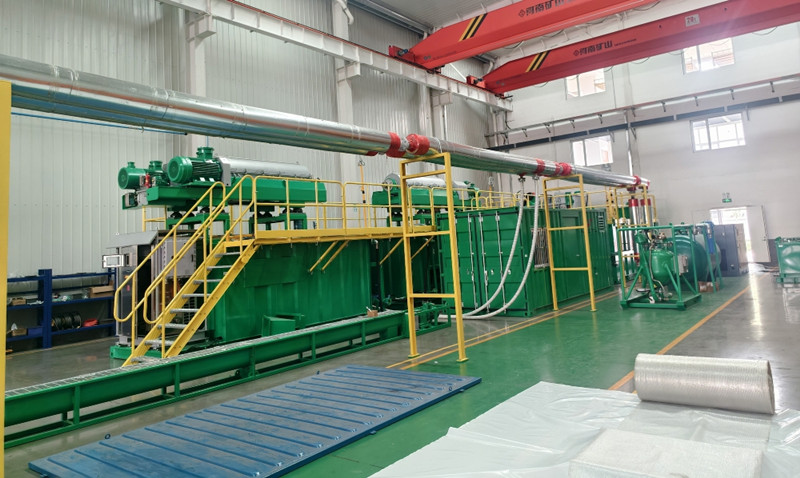
GN Separation has recently completed the manufacturing of two sets of GNOST15 Oil Sludge Treatment Systems OSTS These advanced systems are currently undergoing rigorous factory trial assemblies to ensure optimal reliability and performance before shipment
The GNOST15 is a comprehensive modular solution engineered to tackle the complex challenge of oil sludge treatment especially sludge with high solid content emulsified oil and fluctuating viscosity Designed for refineries tank cleaning contractors and environmental service providers this system ensures efficient separation of oil water and solids while minimizing operational cost and environmental burden
Seven Modular Units Working as One
The GNOST15 consists of seven specialized modules each playing a critical role in transforming hazardous waste into reusable resources
1 Slurry Feed Pump Module Delivers raw sludge under high pressure to maintain uninterrupted operation
2 PreMixing Tank Module Uses agitation steam heating 60 to 80 degrees Celsius and chemical dosing to break emulsions and enhance fluidity
3 Shale Shaker Module Removes large solids greater than 2 mm with a high-frequency shaker protecting downstream equipment
4 2-Phase Decanter Centrifuge GNLW554 Removes fine solids with over 95 percent efficiency producing a cleaner oilwater mixture
5 3-Phase Centrifuge GNLWS554 Separates the mixture into recovered oil clean water and residual solids maximizing oil recovery and regulatory compliance
6 Chemical Dosing Unit Allows flexible dosing of demulsifiers flocculants and pH modifiers to adapt to various sludge types
7 Steam Generator Module Provides efficient heating for viscosity control and emulsion breaking
Enhanced Separation through Heating and Conditioning
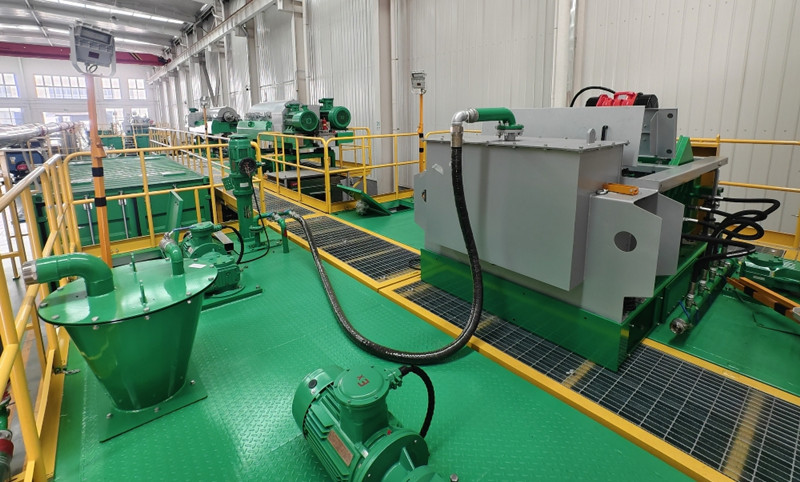
Heating plays a vital role in reducing viscosity and improving oil water solid separation In the premixing tank module the sludge is conditioned by steam generated on site along with chemical dosing This combination significantly improves process efficiency and ensures better separation results downstream
Maximizing Recovery Minimizing Waste
The core of the system lies in its high performance decanter and three phase centrifuges which together allow efficient removal of solids and precise separation of oil and water The result is reduced waste volume and higher hydrocarbon recovery making the process both environmentally and economically beneficial
Designed for Sustainable Industrial Performance
With its modular layout robust components and automationready control the GNOST15 system is suitable for a wide range of oil sludge treatment scenarios It empowers clients to meet environmental regulations while reclaiming valuable oil and reducing overall operational cost
Interested in learning more about how GN Separation can support your oil sludge treatment projects Feel free to connect with us for technical details and reference cases
Turning Waste into Resource: How Centrifuges Enable Efficient Used Cooking Oil Recovery
With the global push toward sustainability and renewable energy, the recycling of Used Cooking Oil (UCO) has become more important than ever. UCO, typically collected from restaurants, hotels, and food processing facilities, can be transformed into biodiesel, an eco-friendly alternative to fossil fuels. However, the collected oil is often mixed with water, food particles, and other impurities, making effective separation a key challenge.
This is where three-phase decanter centrifuges come into play.
Why Used Cooking Oil Matters
Used cooking oil is a valuable feedstock for biodiesel production and plays a significant role in the circular economy. When disposed of improperly, UCO pollutes water sources and clogs sewer systems. Recovering and refining UCO not only reduces environmental damage but also creates a renewable source of energy.
How Three-Phase Centrifuges Work
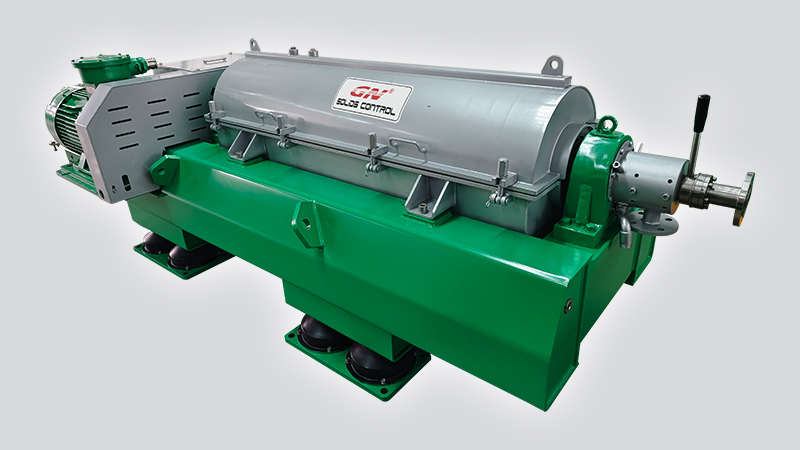
A three-phase decanter centrifuge separates UCO into three streams:
Oil phase – suitable for further refining or biodiesel production
Water phase – treated to meet environmental discharge standards
Solid phase – food particles that can be composted or digested
Compared to traditional filtration or gravity methods, centrifuges offer continuous, automatic, and high-efficiency separation, improving oil recovery yield and reducing labor and space requirements.
A Smart Solution for Biofuel Plants and UCO Collectors
At GN Separation, our GNLWS series three-phase centrifuges are widely used by biofuel producers, waste oil collection centers, and environmental service providers. These machines are known for:
Robust stainless steel construction
Easy operation and maintenance
Reliable separation performance even with high-solid-content mixtures
Want to learn how centrifuge technology can upgrade your UCO recovery process? Contact us or watch our video case studies to explore real-world results.
Operation Management of Decanter Centrifuge
When the decanter centrifuge operates, the high-speed rotation of its drum generates a strong centrifugal force. This force drives solid particles—denser than the liquid phase—toward the inner wall of the drum, forming a solid layer (also known as the solid ring layer due to its annular shape). The liquid, having lower density and subject to less centrifugal force, remains inside the solid layer, forming the liquid ring layer. Continue reading
Decanter Centrifuge: A Key Technology for Environmental Protection Applications
Environmental protection is a fundamental national policy, and the environmental industry plays a critical role in preventing pollution, preserving natural resources, and enabling sustainable economic growth. In many countries, decanter centrifuges are widely recognized as a preferred choice for sewage and sludge treatment, offering high efficiency and automation in solid-liquid separation processes. Continue reading
Hydraulic-Driven Decanter Centrifuge vs Conventional Decanter: What’s the Difference?
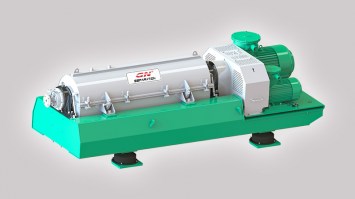
When it comes to solid-liquid separation in industries such as wastewater treatment, oil sludge recovery, and mining, the decanter centrifuge is a vital piece of equipment. While traditional gearbox-driven decanters have dominated the market for decades, hydraulic-driven decanter centrifuges are becoming increasingly popular due to their performance advantages. Here’s a closer look at the key differences between these two technologies.
- Power Transmission: Gearbox vs Hydraulic System
The most fundamental difference lies in how torque is transmitted to the scroll (or screw conveyor). Conventional decanter centrifuges use a mechanical gearbox to generate the differential speed between the bowl and the screw. In contrast, hydraulic-driven decanters use a hydraulic pump and motor system, which offers smoother and more flexible control.
Hydraulic systems can provide higher torque at low differential speeds, which is particularly beneficial in handling high-viscosity or highly concentrated sludges.
- Torque Control and Process Flexibility
Hydraulic-driven decanter centrifuges excel in torque control. They can maintain a stable differential speed even under varying feed conditions, ensuring more consistent performance. This adaptability improves separation efficiency, reduces wear, and enhances the quality of the discharged solids and liquids.
In comparison, mechanical gear-driven systems are more rigid. Although reliable, they may require frequent manual adjustments or risk performance loss when the feed conditions fluctuate significantly.

- Maintenance and Durability
While hydraulic systems may seem complex, they are often easier to maintain in heavy-duty applications. There are fewer mechanical parts under high stress, and the hydraulic components are typically sealed from the harsh process environment.
However, conventional decanters with gearboxes are known for their simplicity and lower upfront cost. For basic or small-scale operations with stable feed characteristics, they remain a practical option.
- Energy Efficiency and Application Suitability
Hydraulic-driven decanters are often more energy-efficient in handling difficult or variable feed, especially when high torque is needed. Industries dealing with oil-based sludges, drilling fluids, or fine particles benefit from the enhanced control and performance.
Conventional decanters are better suited for straightforward, predictable applications where high torque is not a constant requirement.
Conclusion
Choosing between a hydraulic-driven and a conventional decanter centrifuge depends on the application’s complexity, budget, and performance needs. While hydraulic systems offer superior torque control, flexibility, and durability under demanding conditions, conventional decanters provide cost-effective reliability for standard tasks. Understanding these differences is key to selecting the right equipment for your process.