Monthly Archives: December 2023

Chemical Dosing System

A chemical dosing system is a mechanism or set of equipment designed to accurately and efficiently introduce chemicals into a process or system. These systems are widely used in various industries such as water treatment, wastewater treatment, industrial processes, and chemical manufacturing. The goal of a chemical dosing system is to control the dosage of chemicals to achieve specific outcomes, such as water disinfection, pH adjustment, coagulation, flocculation, corrosion inhibition, and more. GN we have a manual and automatic dosing system. Here are some key parts of the chemical dosing system. Chemical Storage Tanks are thanks that hold the chemicals to be dosed. They can range in size depending on the application and the volume of chemicals required. Controllers are devices that monitor and regulate the dosing process. They can be programmed to adjust dosage rates based on real-time conditions, such as flow rates, pH levels, or other relevant parameters. Sensors and Analyzers are devices measure the chemical concentrations or other relevant parameters in the system. Common sensors include pH meters, conductivity sensors, turbidity meters, etc. Tubing and Piping transport the chemicals from the storage tanks to the dosing pumps and then into the system being treated. Valves control the flow of chemicals through the system, and fittings ensure proper connections between different components. Chemical dosing systems often include safety features such as leak detection, alarms, and emergency shutdown mechanisms to prevent accidents and ensure the safe handling of chemicals. GN also has containerized combined chemical dosing system is mainly used in outdoor environment. It is rain and dust resistant, providing a safe and comfortable operating environment for operators, and facilitate the movement and transportation of the workplace. GN containerized combined chemical dosing system is composed of automatic dosing unit, several mixing barrel dosing unit and heat preservation containers. The thermal insulation container is designed according to the standard of camping house, including doors, windows, lighting system, embedded cables, water inlet and slag outlet Chemical dosing systems are crucial for maintaining optimal process conditions, ensuring product quality, and meeting regulatory requirements. They are widely employed in municipal water treatment plants, industrial facilities, and other settings where precise chemical control is necessary for operational success and environmental compliance. . To show how GN has an advance approach at these dosing systems, and how we can modify them to clients special request.
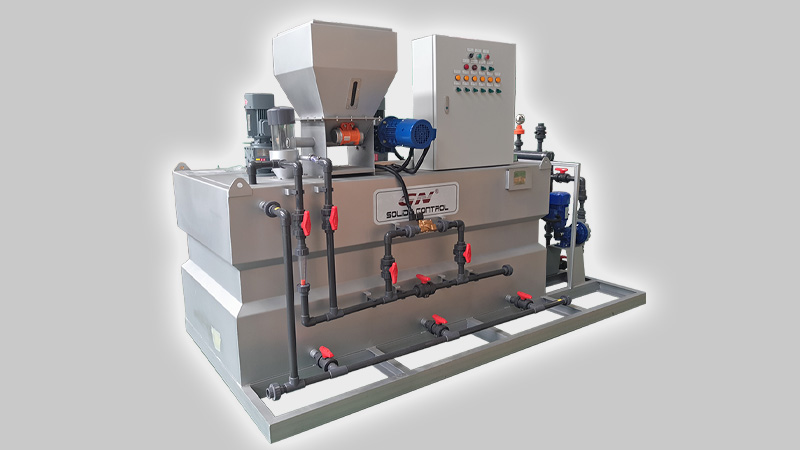
 

2020.07.08 Polymer Dosing Unit

Decanter Centrifuge

A decanter centrifuge, also known simply as a decanter, is a specialized type of centrifuge used in various industrial processes for separating solids from liquids. It is particularly effective in applications where the solids and liquids have a significant difference in density. The decanter centrifuge operates on the principle of sedimentation, where centrifugal force is used to accelerate the settling of particles. At GN we have may different sizes of decanter centrifuges. These machines have been operating according to the same basic principle since the 19th Century. Gn produces from 9inch to 30inch bowl. The main function of our centrifuges is dewatering sludge, and mud. Thickening sludge, clarifying different type of liquids, separating 3-phase mixtures, classifying solids in a wet suspension by grain size, and separation of solids according to various densities. The main industries of application of GN centrifuges is Oil and Gas drilling mud solids control, Drilling waste management, oil sludge treatment, HDD trenchless mud cleaning, Bored pile and TBM mud dewatering. Also in waste water treatment, chemical and pharmaceutical separation, mining and food and beverage industry. Our centrifuges are either fixed speed or controlled by VFD. A VFD system can change the bowl speed, differential speed, and pump capacity. It has a touch screen for user-friendly operation and smart control with protection. We also have a fully Hydraulic Drive Centrifuge, which is compact in design and makes it easier for rig set up. The centrifuge works in a way with feed inlet, The mud or slurry is added into the centrifuge through it. As the mixture enters the bowl, it experiences high rotational speeds. The centrifugal force generated by the rotation causes the denser solids to move outward toward the bowl wall, while the lighter liquid phase moves toward the center. The separation process occurs due to the density difference between the solids and the liquid. The centrifugal force acting on the particles causes them to settle at the bowl wall, forming a solid cake. Meanwhile, the clarified liquid, known as the centrate or effluent, collects in the center. To continuously discharge the separated solids, a scroll conveyor or auger inside the bowl rotates at a slightly different speed than the bowl itself. This differential speed helps convey the solids toward the discharge end of the centrifuge. Decanter centrifuges offer continuous and automated separation, making them efficient and suitable for large-scale industrial processes. They are a crucial tool in industries where separation and clarification of liquids and solids are vital for product quality, environmental compliance, or resource recovery.


Large Vibrating Screen

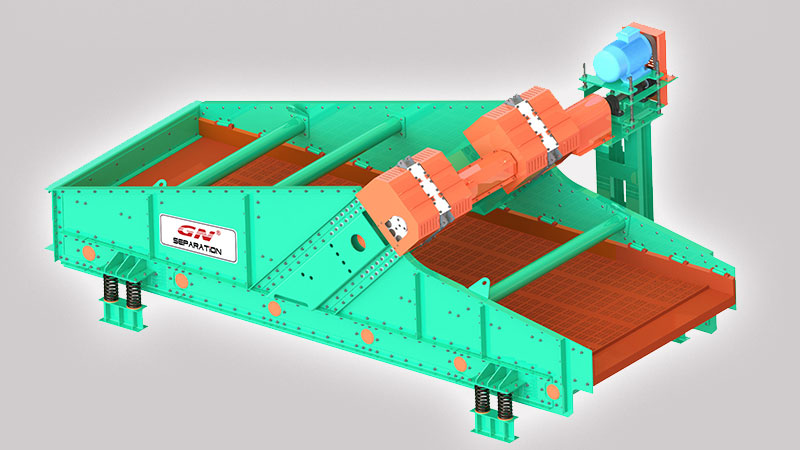
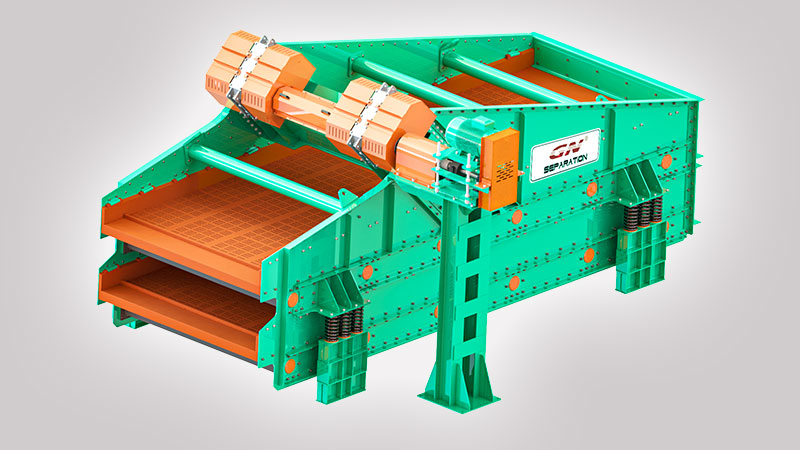
GN has developed a large linear vibrating screen for our iron ore clients. It is a large vibrating screen is a mechanical tool used to separate solid particles of different sizes by utilizing the principle of vibration. These screens are commonly used in industries such as mining, metallurgy, coal, construction, and chemical processing. The primary purpose of a large vibrating screen is to separate materials into various sizes for further processing or to remove impurities. Large vibrating screens use a vibration mechanism to induce motion in the screen deck. This mechanism is often an eccentric shaft with counterweights or unbalanced motors. The vibration helps to convey the material along the screen and aids in the separation process. Large vibrating screens may have multiple screen decks stacked on top of each other. This allows for the separation of material into different fractions in a single pass. The screen surface is the area where the material separation takes place. It is typically made of durable materials such as steel or polyurethane. The screen surface may have different opening sizes or patterns to allow for the classification of materials based on size. The drive unit is responsible for generating the vibratory motion. It can be an electric motor or a hydraulic drive system, depending on the design and application. A robust support structure is essential to provide stability and support for the vibrating screen. This structure must be able to withstand the dynamic forces generated during operation. The angle of the screen deck is adjustable and influences the material’s movement on the screen. The angle is typically set to optimize the screening process for specific applications. Material is fed onto the vibrating screen at one end, and the separated fractions are discharged at the other end. The design of the feed and discharge ports can impact the efficiency of the screening process. The screening media is the material used on the screen surface to facilitate the separation process. Common types include woven wire mesh, polyurethane panels, or perforated plates. Large vibrating screens are used in various industries for applications such as scalping, dewatering, classifying, and sizing bulk materials. The specific design and features of a vibrating screen depend on the material characteristics, required throughput, and the operational conditions of the process. GN we have three different types of screens. Large linear vibrating screen, large banana vibrating screen, and large flip-flow vibrating screen. Our large screens assist mining companies with their projects and success.

Tubular centrifuge

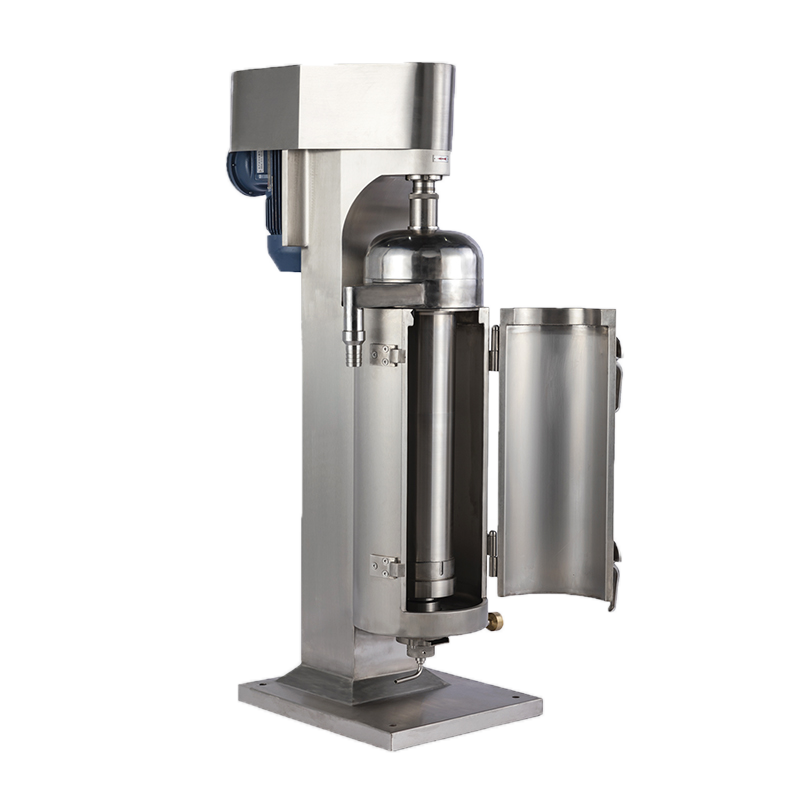
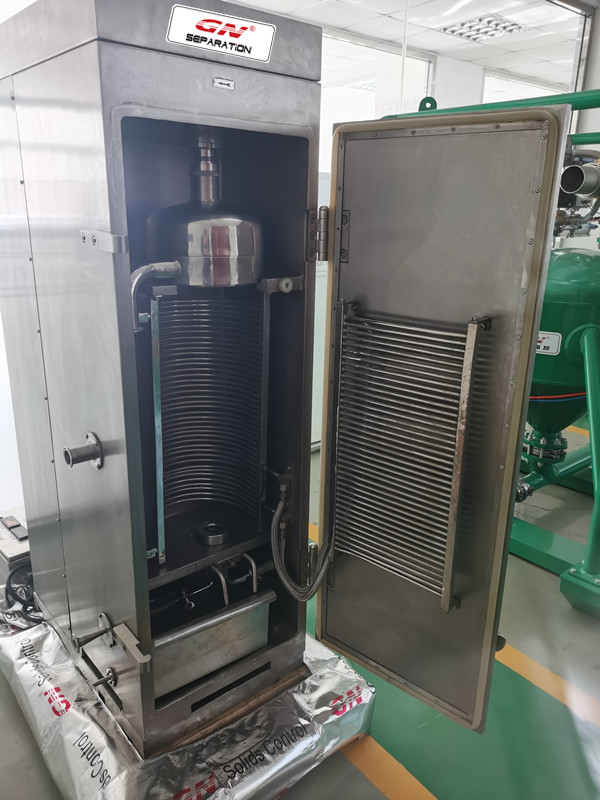
A tubular centrifuge is a type of centrifuge that separates liquids from solids or separates liquids of different densities using centrifugal force. It consists of a series of tubular bowls or chambers arranged in a circular or parallel configuration. These tubular bowls rotate at high speeds, generating centrifugal force that causes the separation of components based on their densities. Tubular Centrifuges is artificial slag removal equipment, and the processing capacity is limited, so it is generally used for working conditions with low solid content and relatively small processing capacity. The main separation occurs within the tubular bowls, which are long, narrow cylinders with a series of concentric tubes. The rotating motion of the bowls creates high centrifugal forces that drive the separation of different components. According to the function, high speed tubular centrifuge has two types: clarification type and separation type. The clarification type Tubular Centrifuge is mainly used for separation of liquid and solid, and the separation type Tubular Centrifuge is mainly used for separation of liquid (light phase), liquid (heavy phase), and small amount of solid.

GNGQ — Clarification Type Tubular Centrifuge

The centrifuge rotates at a high speed to reach a suitable working speed (the speed can be adjusted by the electric control panel), and the feeding inlet is continuously fed from the bottom, and a certain feeding pressure (greater than 0.05Mpa) is required. The specific gravity of liquid phase in the feeding inlet is lighter and it gradually spirals upward from bottom to top to continuously discharge from the clear liquid outlet at the upper part of the rotor. The specific gravity of solid phase is relatively heavier, and it settles inside the rotor. After the solid is collected and full in the drum, the machine stops, and the rotor is manually removed for slag cleaning.

GNGF — Separation Type Tubular Centrifuge

The centrifuge rotates at a high speed to reach a suitable working speed (the speed can be adjusted by the electric control panel), and the feeding inlet is continuously fed from the bottom, and a certain feeding pressure (greater than 0.05Mpa) is required. There is difference in specific gravity of the two liquid phases in the feeding inlet, and they are incompatible with each other. The two liquid phases gradually spiral upward from bottom to top until the upper part of the rotor. The liquid phase with lighter specific gravity is discharged from the light liquid outlet, and the liquid phase with heavier specific gravity is discharged from the heavy liquid outlet. The specific gravity of solid phase is the heaviest, and it settles inside the drum. After the solid is collected and full in the drum, the machine stops, and the rotor is manually removed for slag cleaning.

Separators: High Speed Tubular Centrifuge - GN Separation Equipment Manufacturer High G Force Tubular Centrifuge Shipped to Europe Client - GN Separation Equipment Manufacturer